 Due to issues with my eyes, I’ve had to be very careful recently about the pace of my reading. I try not to read too much at one sitting, and I try not to read too much over the course of a single day. My vision gets blurry if I push too hard, and if I go way overboard, my eyes start to hurt.
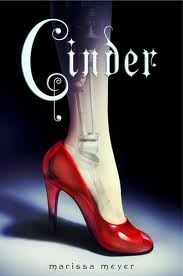
This became a real problem when I picked up Cinder by Marissa Meyer, as it was the first book I’ve read in the last year or so, that I could just not put down. The last hundred pages kept me up well past my bedtime, and violated my self-imposed reading limit by a good hour. But it was completely worth it. And I’m not the only one who thinks this book is good. My wife initially bought this book on Kindle, and then went out and bought it again in hardback. It’s that great. Spectacular even.
Cinder is a cyborg, living with her stepmother, and her stepsisters, Pearl and Peony, in a future where the Earth has seen multiple world wars. A pandemic, with no cure, is devastating the population. In this world, Cinder is a gifted mechanic with a reputation of being able to fix just about anything. When the Emperor’s son, Prince Kai, stops by her shop to see if she can fix his android, Cinder unwittingly becomes embroiled in world of treason and espionage, where no one can be trusted.
If this story sounds familiar, it should be. There are plenty of references to that famous folk tale from the 1600’s. But this is also science-fiction and also YA. The setting is so well done, and the characters developed as impeccably as any I have read recently—that the fairy tale behind the plot becomes secondary. The execution of this iteration just hits the mark flawlessly. The cover is beautiful. Even the font used in the hardcover edition is perfect for the story. I never knew font in books could really be anything but Times New Roman and be so dang effective.
Perhaps it sounds like I’m being a bit obsequious here, but I’ll stand by my earlier statement that this is just a great, great book. Add this one to your reading list. You won’t regret it.
And if anyone knows the name of the font used in the hardcover, please let me know. I’m interested in trying it with some of my writing to see if it makes a difference in how my stories of the future feel.
It should be pretty obvious, from some of the music videos I’ve linked to, that I have very diverse musical tastes: everything from Dire Straits to Guns and Roses to Johnny Cash to Garth Brooks to Tim McGraw to John Tesh to Enya to Beethoven to newer bands like Zac Brown and Trent Severn and Train. When I hear good music, or a beautiful song, by an artist “teenage Joe” wouldn’t admit to liking for fear of getting beat up, I’m no longer worried that admitting to it will somehow challenge my manhood. I think part of that is that as an author myself, I realize how hard it is to be creative, and I want to celebrate it, and share it.
So when I heard Taylor Swift’s new song “Begin Again” on the radio, I thought, “Wow, that is really beautiful.”
So, for your morning’s listening pleasure, here it is:
Enjoy.
 My wife recommended I read Tamar by Mal Peet earlier this year, and it was the first book I tried to read on my Kindle after I became ill with Guillain-Barre Syndrome and lost most of my vision. I was only able to read a page or two at a time back then, and I just couldn’t keep my head in the story. Few books are good enough to keep anyone’s head in them when it takes months to read.
But this one was good enough that when I did get my eyesight back, I cracked it back open (as much as you can crack open a book you read on a Kindle), and finished the story. And I’m glad I did.
Tamar is a YA novel, but it actually jumps between a war story set in Holland during the winter of 1944-45 and the YA portion set in the summer of 1995. Holland during the winter of ‘44 was occupied territory, run by the Nazi regime and a brutal cadre of SS officers who were determined to starve the countryside clean of both Jews and the Dutch Resistance. Into this devastated landscape, two British agents are dropped to organize and communicate with the Dutch Resistance. In 1995, a young girl, Tamar, tries to cope with the suicide of her grandfather, and in doing so, finds a trail of deception that leads back fifty years.
A little back story from me: my father grew up in Holland during World War II; in the winter of 1944 he would have been 12 years old. My mother was born in Belgium, and that year, she would have been 6 years old. My parents rarely talked about the war while I was growing up, except to say that “it was a bad, bad time.” So to read a story that is set in the same region as my father grew up was quite fascinating. What I don’t know, is how accurately the events are portrayed. From the author’s note in the back of the book, I know Peet did quite a bit of research, but there is a difference between researching something and living through it. I would love for my folks to read this book and then to let me know how well Peet did in recreating life in the occupied territories. But I also wouldn’t want them to read it and be somehow sent back to an era they probably would prefer to forget.
I had a little difficulty getting into the 1995 storyline of this book, but I think it was because a) so much time elapsed between the time I read the beginning of the book and the end, that I may have forgotten some critical pieces; b) because of the personal connection to Holland in 1945, those parts grabbed me just a little more; c) part of the storyline for 1995 made me really uncomfortable, so I might have rushed through it, too. Still, the main character was engaging and the story unique.
Overall, Tamar, is a decent book. If you have a connection to the ‘old country’ like I do, you may want to read this and then talk to those who lived through it to see how their experiences compared to the book. At the very least, you might understand those people a little better. Perhaps, however, it might open the door for some further discussions of family history. That doesn’t happen a lot because of a book (at least not for me).
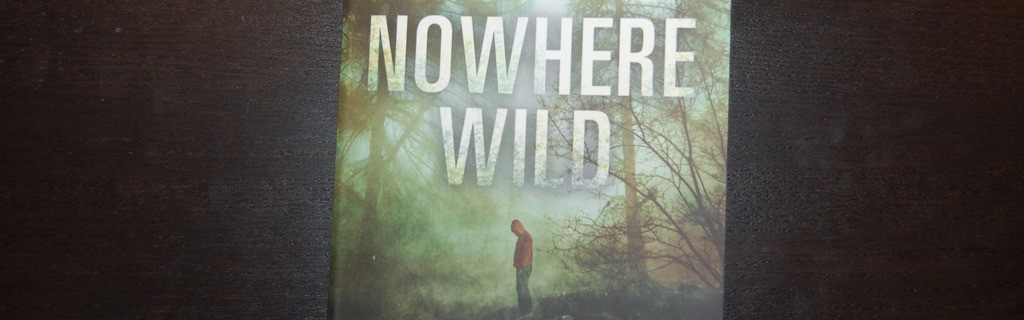
I know I announced the sale of Nowhere Wild to HarperCollins Canada back in September, but now it’s listed on my agent’s site http://cookeagency.ca/news.htm.
There isn’t any more news pending on that front (and I don’t expect there to be for quite a while), but to see it on someone else’s site is pretty cool.
Now, back to work. The books, they don’t write themselves.
 It’s not often that a book on punctuation can be entertaining. Actually, I don’t think I’ve ever read a book on punctuation that was entertaining. Until now.
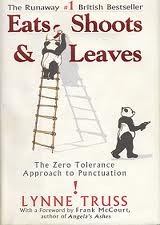
Eats Shoots and Leaves by Lynne Truss uses examples from everyday life to castigate those who refuse to punctuate properly. Whether it be the lack of understanding on how to appropriately use an apostrophe, or overcoming the fear of using the dreaded semicolon, Truss reviews the cases, and explains the scenarios for proper usage.
Sure, lots of other books do that, but Truss is a self-confessed Punctuation Vigilante. She rages against the decline in the ability of the average citizen to punctuate, and lectures in a voice that one cannot help but to associate with the legendary Maggie Smith. Imagine, the Dowager Countess of Grantham grousing at the work it takes to patrol the city streets for punctuation violations:
“It’s tough being a stickler for punctuation these days. One almost dare not get up in the morning.”
And, when discussing the rules for when to use a comma, and when not to, this delightful passage:
“The big final rule for the comma is one that you won’t find in any books by grammarians. It is quite easy to remember, however. The rule is: don’t use commas like a stupid person. I mean it.”
This book is not an easy read, nor is it going to jibe with the American editorial rules, as it is written for a British audience. Still, I learned a lot from it; I’ve never been comfortable with that dastardly semicolon; I also discovered I’ve been mis-punctuating around my dialogue for years.
For instance,
“I’m tired.” said Sally.
should be
“I’m tired,” said Sally.
I know that looks obvious now, and I was probably going to get a whole bunch of red marks in my manuscript from my editor regarding this third-grade error in the near future. But I’d never honestly thought about how it should be. I assumed I’ve been doing it correctly all my life. Good god, that’s just embarrassing now.
Which is probably what Ms. Truss was going for. While it’s funny to read about signs in front of businesses claiming to be “Bobs’ Bakery”, it’s not so funny to find similar errors in your own, supposedly literate works.
And now, I fear that as soon as I hit publish on this blog, Ms. Truss will descend upon it and begin marking it up with a digital Sharpie. But I’ll be okay with that once the blush fades from my cheeks, as I hope it will reduce future punctuation related tragedies.
If you’re a writer, pick up this book. You’ll laugh a bit and learn a lot.
I grew up in Canada, and we called November 11, Remembrance Day, not Veterans Day. I’m an American citizen now, and I do appreciate the sacrifices of the US men and Women in the Armed Forces. But November 11, will always be Remembrance Day to me.
In Canada, the tradition is to wear a poppy on your lapel in the days leading up to November 11th. The poppy, as a symbol of World War I, as every Canadian school boy or girl knows, originates from the poem In Flanders Fields by John McCrae:
In Flanders fields the poppies blow
Between the crosses, row on row,
That mark our place; and in the sky
The larks, still bravely singing, fly
Scarce heard amid the guns below.We are the Dead. Short days ago
We lived, felt dawn, saw sunset glow,
Loved and were loved, and now we lie
In Flanders fields.Take up our quarrel with the foe:
To you from failing hands we throw
The torch; be yours to hold it high.
If ye break faith with us who die
We shall not sleep, though poppies grow
In Flanders fields.
Back in high school, I read the book Vimy by Pierre Berton about the famous Battle of Vimy Ridge. I have said, time and time again, that I didn’t know what it meant to be Canadian until I read that book. I highly recommend it, even if you aren’t Canadian. I’ve reread that book many times since then, but a few years ago, I loaned it to someone, and never got it back. I’ll have to track down another copy so I can read it again, soon.
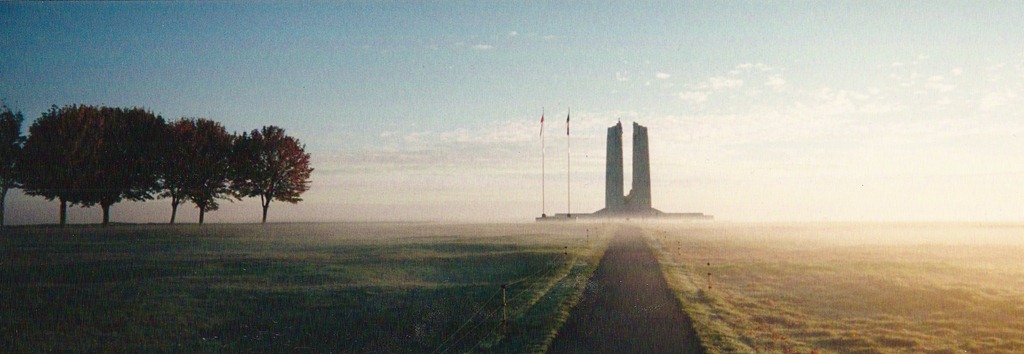
In October, 2002, I had the honor and privilege to be able to visit the Vimy Ridge Memorial in France. I took this picture as I approached the memorial on a cold, calm morning while the sun rose to my right. I have a large version (of better quality) of this hanging on my office wall. It was one of the most moving experiences of my life. I cried then, and I’m tearing up a bit now as I write this.
While in high school, I wrote a short story called Saluting a Memory. It’s not the best writing I’ve ever done, but I have kept it around, and I’m not ashamed to show it to you now (though I did clean it up a bit for grammar, spelling and a few poorly worded sentences). I won second place with this story back in 1988 in the Lambton County Royal Canadian Legion Writing Contest, which I guess was my first ever contest win.
Saluting a Memory
He sat on the edge of his bed, ready for the familiar crack of joints that had accompanied the first movements of the morning for the past decade. He rose, wavered, and grasped the chair beside the bed. He felt the stiff, heavily starched collar of the blazer someone had set there for him. He glanced down at the dull, dark green uniform jacket he remembered so well. His fingers worked their way along the collar, with the embroidered insignias and the small, brass buttons. He tried to remember why it was out. What was the occasion? The number eleven flashed in his mind. The eleventh day of the eleventh month, eleven on the hour. His head snapped to attention. His right arm rose and he saluted a memory, crisply, precisely, as he had been taught so many years before. His arm dropped, slowly, silently, so as not to alert the Krauts to his position.
“Yes, general.” The cold wind blew through the open tent flaps from the frozen battlefield. Brief reports from the German-seeking six inch guns sounded to the west. He exited the tent, pulling his collar up as he did so. The world was silent for the most part. The Christmas Day truce slowed things down, but the battle never truly stopped.
He entered the maze of trenches that would carry him to the front, more than two miles away. A rat scrambled between the boards, ten feet in front of him. He paid no attention. He had a message—an urgent one—to deliver to the front. The frozen mud in the trench made the passage treacherous at points, but even with the truce, it wasn’t safe to be up top. He tensed as he neared the front. He had been here thousands of times for various reasons, but the place still got to the heart of him. He rounded a corner only to come face to face with an impenetrable wall of frozen blocks of French mud. Going all the way around would take twenty minutes. He decided to climb over. Ice covered the mound of slumped ground, and summiting took some work. It was then that he heard it—the whistle of an incoming shell. The “Widowmaker’s Whistle”, they called it. He dove back the way he came. The shell slammed into the earth as he fell back into the trench.
He moved around his room with relative ease. He slipped his pants on first, and struggled with the small button. His thumb slipped a couple of times, but he did it, just as he had thousands of times before. Next was his crisp, white, T-shirt—something that many take for granted now—but something that during the war was a luxury which very few had. He tucked it neatly into the loose pants. He reached for his shirt. These buttons were much more difficult. His arm grew tired. Like war had done forty-six years before, age had taken its toll. He used his chin to hold the shirt together as he passed each button through the fabric button hole, but managed by perseverance, plain and simple. He sat down in his chair, careful not to wrinkle anything, as he proceeded to put on his spit-and-polish clean shoes, just as they taught him to do in boot camp. He remained Army, through and through.
He rose again, with fewer perceivable cracks this time. He shuffled across his room, until he stood before the mirror. His hand slowly moved up, towards his face and the remnants of his repulsive scar. He knew every bump and hollow of this souvenir from many years ago.
He felt heavy, very heavy. He was cold, almost frozen. He tried to move but couldn’t. He remembered the sound of the shell, and diving, and… nothing. His hands began to numb. He heard voices, and tiny taps near him. He began to move his ankles, the only thing that seemed free. Breathing became incredibly hard. His lungs screamed for air. He began to kick harder. “He’s alive! Dig faster!” unknown voices rumbled through the dirt. Someone grabbed onto his feet, and began to pull. He slid backwards. Movement became easier. Cries for a medic echoed down the trench. Finally, fresh air reached his lips. He sucked in the air in big gulps. Pain radiated from dozens of places, but at least he was alive.
He tried the top button. Twice, three times he failed, but he was not a quitter. On the fourth time he succeeded. Proud of his achievement, he let out a brief smile. Next was a clip on tie, which he did quite easily. A normal person wouldn’t have done it any faster or better. He turned and picked up the jacket, deftly put it on, and faced the mirror once more. He admired the medals and ribbons which he had cleaned and polished the night before. Something was missing. He didn’t know what it was, but it was something important.
He combed his hair—what was left of it—and picked up his beret, which had also been picked clean of lint the night before. He scanned himself in the mirror. His face became younger, and again he was remembering the war.
The field hospital was set in a one room school house. He spent three days of the hardest days of his life there. People died around him, crying out in there last moments before succumbing to the pain. He cried because he could do nothing for them. He never cried once for himself. Not one tear. He had been through worse, and he was still alive.
His stay was brightened by a visit from an eight year old French girl named Maria. She gave him something simple… a flower. A small orange flower… the symbol not of death, but rebirth. It was the nicest thing anyone had ever done for him, and he treasured that moment.
He reached just above the edge of the mirror, and plucked down what was missing: a small red-orange poppy; not the same one, mind you, but a close match. He carefully inserted it into his lapel, and the picture was complete.
An hour later, he strolled slowly down the city street, admiring his chosen country, a country he loved and fought for, and would do it again if he could. The smaller children stared at the stranger on sidewalk, with one arm and a crooked smile, and were frightened. He smiled and hoped they would never experience what he had, but could live a long and happy life in this free country called Canada.
To all those veterans, both alive and gone, today, I Salute you.
It’s November, so that means that a ton of people out there are diligently working on their NaNoWriMo (National Novel Writing Month) novels. While I am not actually participating in NaNoWriMo, I did start a new novel on November 1st. This novel is unlike anything I have ever written before, but is more an experiment to see if I can write this style and genre, rather than a serious effort to change my writing focus away from YA.
I’m not going to talk much about this book until a) it is done, b) it is something I would proudly associate with my name, and c) I break it to my agent that I have again done something unusual. Any, or all three, of those things may never happen.
So why write something that I may never publish? Well, first of all, I hadn’t written a new story in almost a year, and I needed to get back on that horse and prove to myself that I still could. Second, I wanted to work on a few aspects of writing that my previous novels don’t cover or do very well… mainly female characters and more dialogue-intensive story telling. Also, since I’m not working full time right now, I wanted to see just how easy of hard it was to write full time when I had no distractions, and could just plow through a novel in a very short amount of time.
A couple of discoveries:
1) I’ve maxed out at about 2600 words in a day. I know that a couple of years ago, I was able to write 3500 words a day, but even 2600 right now, on a single story, seems like a lot. My brain needs time to prep each scene before I sit down to write it, and pushing through much faster right now often leaves the story a bit jumbled and in need of a lot of editing.
2) I actually write better when I have more than one thing going on. i.e. I’ve written over four thousand words in a day a couple of days this week, but many of those were on blog entries or other editing efforts. I see that as a good sign—that when I need to in the future, I’ll be able to split time and not feel the worse for the wear.
I am, more or less, adhering to the NaNoWriMo pace of about 1666.66 words per day, but fall behind a bit on the weekends, when I spend more time with the kids. This doesn’t make me feel bad or hurried, but it does give me added incentive to keep at it when I seem stuck. I write my way out of the difficult scene, and the numbers just start to add up.
So while I am not “doing” NaNoWriMo, I am doing it. I just consider it more of a day job than a special month of the year where I finally have time to sit down and write that Great American Novel.
It’s that time again to recap what I’ve been watching on the tube (flat screen?) these days. The list continues to shrink as I exchange the time I was spending watching movies with time for writing and reading. That’s a good thing. Still, I do need some down time now and then, so TV / NetFlix still helps me when I need to rest.
I’ve added a new section for TV this month, as the new fall lineup has begun. I’ve listed those in my “must see order”. Castle holds the coveted top spot for the second year in a row, but my surprise hit of the year is Chicago Fire, probably because it seems to be an homage to one of my favorite shows as a child, Emergency. We started watching Elementary, but my wife couldn’t get past the pilot, and I stopped after episode three. We’re way behind on Revolution and Glee.
I like watching Gold Rush, but it’s a bit of a guilty pleasure. It’s one of those where I appreciate how hard those guys are working, and the show is very well done, but the environmental impact of what they are doing is not lost on me. I really don’t want to encourage this kind of planetary destruction.
We’ve also been working back through the first couple of seasons of The West Wing, which, in my humble opinion, is probably the best written television show ever made. I watched all of it when it originally aired, and I’ve seen most of the episodes at least one other time in reruns. Still, it’s my go-to show when I’m in a political mood.
So anyway, listed below are the movies and TV series I’ve been watching since Part VI of this series:
- [x] = Number of Episodes watched if TV show
- ( y ) = Rating out of 5.
- Items in bold = ones I highly recommend
Television
- Castle
- Chicago Fire
- The Big Bang Theory
- Gold Rush
- Arrow
- Revolution
- Glee
- Elementary
Instant Watch
- Battle of Britain (3)
- Cosmos: [1] (3)
- Freedom Writers (3)
- Friday Night Lights: Ssn 1: [3] (4)
- Hell on Wheels: Ssn 1: [3] (4)
- Mad Men: Ssn 1: [6] (3)
- Rob Roy (4)
- School Ties (3)
- Surviving Progress (2)
- The Planets:[3] (3)
- The Walking Dead: Ssn 2: [6] (5)
DVDs
- Connections 1: [2] (5)
-
Connections 2: [1] (4) Eureka: Season 5: [3] (4) Extremely Loud and Incredibly Close (3) Fight Club (4) Hatfields & McCoys: [1] (4) - Hawaii Five-O: Season 2: [3] (2)
Hide Away (4) Hugo (2) Inspector Morse [1] (2) The Adventures of Tintin (3) The Avengers (4) The Walking Dead: Season 2: [1] (5) The West Wing: Season 1: [1] (5) The West Wing: Season 2: [6] (5) Wallander: Series 1: [2] (4)  My reaction to President Obama’s reelection?
“Pfhew.”
It’s a great relief. I just saw too many bad things happening under a Mitt Romney Presidency, and I didn’t trust the man, or his backers. With Obama, I believe in his intentions. I just don’t know if he’ll be able to follow through on those intentions due to issues (and a congress) beyond his control.
But as I started touring through the election results on a state-by-state basis, I noticed a more substantial, and dangerous division across the country. The red states are implementing more and more measures defensive of their conservative traditions. The blue states (and in WA State, the blue half of the state), are implementing more progressive measures that, while I support them, also aim directly at the heart of the conservative belief system. In a system where left and right are balanced, I’d expect to see more 51-49 results. Instead, I saw a lot of 70-30 results, and that does not bode well for America.
I think we are on the cusp of the Great Migration. More than ever, people will begin to migrate to states or districts which tend to vote more in line with their personal preferences. The workforce is more mobile than ever before, and work of all types is increasingly distributed. You don’t have to live in Michigan to be an autoworker, and you don’t have to live in California to work with computers. As left-of-center independent, I can honestly say I would never move to the deep south because I wouldn’t fit in politically, and I want my vote to count. The same probably goes for conservatives in the south, moving to the Pacific Coast. The trend started with the constant gerrymandering of districts within a state, and now that many people feel their voices can no longer be heard locally because of that, they will begin to make choices to relocate to places where they will be heard, even if they are saying the exact same thing everyone else around them says.
As this scenario develops over the next few election cycles, I expect the red vs blue to only intensify. As more of the liberal states embrace concepts such as gay marriage and environmental protection, and conservatives rally against abortion and taxes and gay marriage, the fractures along state lines will deepen.
Is there hope for America? I think there could be, and it has to do with demographics. The progressive march is powered by an increasingly liberal group of young, politically active, culturally diverse, agnostic Americans. Conservative politics appear (to the left) to be powered by religion and tradition and a fuzzy memory of the ‘good old days’ under Ronald Reagan. The demographics of the GOP vote are getting increasingly older and whiter, and anyone with a calculator can see that that segment of American society will shrink significantly over the next forty years. The GOP will be forced to drift back towards the center in those areas that maintain some kind of co-mingling of beliefs, and thus return to a more balanced political cycle.
But perhaps the Right is correct, and a decade or two of ‘debauchery’ and ‘socialism’ will cause the collapse of the economy, a recognition by the left of the error of their ways, and a return to power of conservatism. Could happen.
Or perhaps, the Democrats will split with far Left vs Center-Left, like the GOP did with the Tea Party vs the Center-Right, and cause a GOP victory in 2016.
For now, I have hope that somehow President Obama can bridge the divide—can figure out how to work with the Right while at the same time pursuing his intentions to build a more progressive America. I hope that the Right doesn’t see this election as an confirmation they need to hunker down for another long fight, using delaying tactics to get their way through the failure of every effort to come from 1600 Pennsylvania Avenue.
But I also think that much of that conciliatory effort has to start with the rest of us. We need to dial down the political attacks and rhetoric—to let our jets cool for a bit while we try to find a way to compromise.
So, in doing my part, this will (probably) be the last purely political post I make for a while. I have plenty of issues to discuss, but they aren’t political ones. It’s time to tackle those issues, and leave the tackling of each other to the football players.
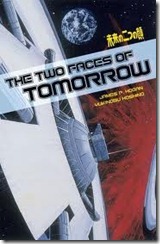 Back in December of 2011, a commenter recommended I try The Two Faces Of Tomorrow by James P. Hogan and Yukinobu Hoshino. I added it to my Secret Santa list for the family, and lo-and-behold, it appeared under the tree on Christmas morn.
Now, let me just say, that I had never heard of this book before that commenter recommended it, and honestly, I didn’t even look at any details about the book when I added it to my list. I just sort of “threw it on there” and never really figured anyone would get it for me. But my brother-in-law drew my name for Christmas, and he is—and I’m sure he won’t mind me saying this—a full-on geek. So I shouldn’t have been surprised when I opened his present, that it would be unusual.
What I didn’t know, was that this was a graphic novel. Yes, I know that I sound like an idiot, but I honestly didn’t know anything about this book beyond the note in the comment.
And now let me follow that admission, by admitting to something even more outrageous. I’ve never read a graphic novel before. The only comic books I’ve read in the last 30 years are the ones my son gets from the library. I’ve just never been into comic books. I can’t say why. The reality is, I’ve never really considered reading them.
So with that said, I was in a bit of a state of shock when I opened this and saw all the artwork. And I shied away from reading it for a while as well, because I thought I wouldn’t enjoy it. I mean, I’m a writer. I write words. I like words. I’m a horrible artist. Absolutely god-awful. How could I truly enjoy and appreciate something that I don’t know anything about?
The Two Faces of Tomorrow presents, in graphic novel form, a story about a space station put together in the not too distant future, to evaluate a very advanced computer system that needs to be isolated from Earth’s massive networks. Humans believe they will be able to study this system in isolation. But they may not be the only ones doing the studying.
So first, as a story, the idea is great, and would make one hell of a movie plot. The writing itself, well, I have a very hard time evaluating that, because this isn’t just a different genre, it’s truly a different medium, and it wouldn’t be fair to compare this to any other novel I’ve ever read. If I have any complaints with the writing, it’s that the characters are very cliché—cardboard cutouts of the rich, brilliant scientist, the well-endowed female psychologist, the gruff military general, and the rough-and-ready cowboy/EVA driver. But with so few words, it’s hard to truly build detailed characters and motives. Perhaps cardboard is needed in this medium.
From an artistic perspective, I’m amazed at the detail in each frame of the story. The book is done in black and white, which shows detail incredibly well. What I struggled with, was trying to figure out what was going on in the frames with no dialogue. I think, with more exposure to this medium, I would begin to recognize the standard symbolism used in each frame in a graphic novel, and understand how each frame helps to build the story without words. Without that practiced eye, I was able to enjoy the complexity of the work, but not its impact on the story quite as much.
I truly do respect the amount of work that must have gone into building a novel of this sort. It’s 570, exquisitely-drawn, pages long. I can’t imagine how long that would take to put together. Reading this was definitely a different kind of experience—one that I do appreciate. But I can’t comment on whether not, within the realm of graphic novels, how this novel compares to others. If you’ve never read a graphic novel before, this probably a good one to read.
Will I read a lot more graphic novels? Right now, probably not. It’s just not something I grew up with, and don’t have a strong affinity for. Would I turn one down if someone gave me another? No. It’s a diversion from what I normally read and write, and sometimes a diversion can really be inspirational.



 Joe Beernink