
My wife read The Maze Runner by James Dashner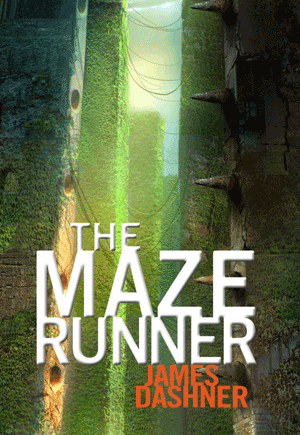 a few weeks before I did, and told me I would really like it. She said it was right up my alley. The writing style was very similar to mine, and that it was similar to The Hunger Games by Suzanne Collins, which I loved.
But before I started to read it, I mentioned I was going to read it to one of the people in my writing group. They got a very disappointed look on their face, and basically told me not to set my expectations too high, and that some parts of the book were very annoying. So it was with a little hope and a little trepidation that I read this book this week.
My reaction upon completing it? I leaned strongly towards the disappointed. The concept was great, and unique, and interesting. A group of boys is placed into a mysterious area called the Maze, which seems to have no solution, and has deadly consequences for those who are not careful while exploring. Where they are, why they have been put there, and what the maze is, is the mystery the boys must resolve. It’s a little bit Hunger Games, a little bit Lord of the Flies, and a little bit The Running Man. All books I liked, and a good idea.
The writing… well, didn’t hold up to the idea. First off, boys being boys, they swear a lot. But instead of using known swear words, the boys have invented their own words, as if the author was afraid of getting banned from school libraries for using shit, fuck and damn. Fine, then don’t use them, or only use them once in a while. Don’t invent new ones, and use them so frequently. This was one of the things my writing critique friend mentioned to me, and I 100% agree.
Second, the rest of the dialog was as if two people were speaking it – a transcription of how people would say things – but not how it would read well. And it was all written with the same voice. You couldn’t tell who was talking by what they were saying. Which was probably okay, since the characters weren’t all that different from each other. Sure there were different characters, good ones, bad ones, whiners and heroes, but they all seemed to blend together, and it didn’t really matter who was saying what.
By the end of the book, I was pretty frustrated with it, and honestly, I think I only skimmed the last couple of chapters. They were clearly setup for the next book, and I have no plans to read it.
I’m always reluctant to post negative reviews of books because I figure sooner or later, they will come back around to bite me. Karma and all that. Someday, I hope to have a book published, and undoubtedly there will be bad reviews as well. But if I’m all ‘glowy’ about every book I read, then I’m not being honest. And my OCD prevents me from not reviewing the books. So in cases like this, I hope the honesty is appreciated if the writer ever comes across this review, and they use it to inspire themselves to improve their craft. That’s what I’m going to tell myself when I read a negative review of my stuff. After I finish crying in my beer.
I made the big decision this week to switch the point of view of my current novel from third to first person. I was only about 2500 words into it, but the words were not coming. Not because of plot of characters, but because of tone. The distance created by the third person view seemed to push the story into the wrong tone, and I wanted it to be more personal. It took me about a day to rework the existing text to first person, and then to review it. I haven’t written in first person since seventh grade. Seriously. I can remember the story. I may, in fact, still have it in my archives. I remember my teacher, Mrs. Jensen, telling me the most invaluable writing lesson ever. If you write in first person, your point of view character cannot die at the end of the story.
I think that lesson has stuck with me perhaps too well, and scared me away from writing anything in first person, because it seems to remove the suspense that this character won’t die at the end. But in all my novels and short stories since, I have yet to kill off any of my POV characters. So maybe I could trust that first person will not limit me now either.
After I finished the conversion, it didn’t take long for the words to start coming again. Perhaps it’s trash. I’m not sure yet, but the words are there, and for a writer, that’s a very good thing.
What’s bad for a writer is getting on the train in the morning, starting up your laptop, and finding the battery near dead, which is what happened to me on Wednesday. And I didn’t bring my charger with me, so I couldn’t charge at work either. The good news is that I had a couple of magazines I had to read for work this month, so I got those both out of the way instead. Otherwise, I would have hauled them around for a couple of months. Once I really get writing, I barely read on the train.
This morning, I worked out the synopsis I need to submit for the Pacific Northwest Writers Association contest entry which is due in a month. I still have some editing to do on the first three chapters of the book, and may, in fact, reorder the chapters slightly. We’re going to work through our submissions in our writing group in a week or so, and make sure everyone gets their entries in on time. It’s the only contest I plan on entering this year, but the year is young.
Work is slightly intruding on my weekend writing time as I am trying to complete a big project by the end of the month, but soon it will move back to where it should be, and I’ll force my ass out of bed at a decent hour to get some writing done on the weekend mornings. I’ve also been churning through some old TV miniseries (Roots and Shogun), and they have chewed up a lot of time as well, but I’ll finish up Shogun tonight, and then my evenings will be free for being creative. I can’t say that watching them has been unproductive. Watching epic stories like these certainly gives me ideas, and I’d have to say that a lot of the inspiration for my current book comes from watching Roots.
That’s it for today. See you next week.
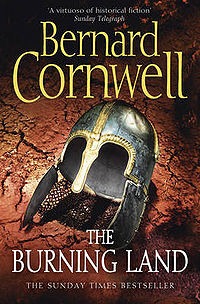 If you look at my bookshelf, you will see that I have over half a long shelf devoted to Bernard Cornwell’s writing. It’s not just that he is prolific – which he is – but he is also very, very good at what he does. The Burning Land is the fifth book in the Saxon Chronicles, the story of Uhtred of Bebbanburg, a Dane at the service of King Alfred of Wessex set around 800 AD. The war between England and the Danes is a bloody, nasty affair that goes on for years, and in the first four books, Cornwell has followed Uhtred from childhood to memorable battles across England and the North Sea. In this book, Uhtred is caught between an oath he made to a dying king, and his desire to regain the lands stolen from him.
I loved this book. I can’t say enough good things about it. It’s an interesting tale, about a fascinating piece of world history. Cornwell often takes a period in history, puts memorable characters into the key places and moments, though usually into the background, and tells a fictional account of true events. I can’t say with any certainty whether or not his stories adhere strictly to exactly what happened, but I would never doubt his research. Yes, he does take liberty in order to enhance the story, but I can’t imagine how you can tell these stories accurately.
In some of Cornwell’s other stories, the characters are a little thin. Throw a hero, a woman in distress and a completely evil villain onto paper so Cornwell can tell us about a battle. But this book is different, in a wonderful way. The battles and the history become secondary to the characters. The characters are flawed and dangerous and all motivated in some unique way. Greed, honor, love, revenge. This story has it all and more. The writing is fantastic, the vocabulary appropriate and intermingled with historical terms and place names that put you right in the time and place.
For lovers of this genre, this is one of those books to curl up with on the couch on a wet and nasty day and get lost in. I didn’t want to put it down, and when I did, even late at night, I was thinking about the story and the characters, and wanting to go to the sites of these battles and see them first hand. I can imagine Cornwell sitting in his study on a cold, blustery day, and not being able to stop writing because he loves the story and it shows. I can only hope that some day, I can generate the same feel with my writing.
This will be a short, entry, mainly because I didn’t write very much this week – about 2000 words total, and most of that was in a single session last weekend. I’m having a little trouble setting the tone for the opening for my new book, and I’ve rewritten some of it a couple of times.
I also had two days off this week where I had big plans to do a lot of writing, but I was home alone with my kids for four days as my wife was out of town, and though they did go to school for two of those days, the rest of my ‘down time’ was spent running errands and going to appointments. Next week I return to my regular work schedule and hope to be writing on the train to and from work. I feel the need to get some numbers added to my word count, and to get back to writing with confidence. Funny how I get more writing done when I go to work.
Anyway, I hope to have more progress to report next week.
 It didn’t take me long to get around to reading Stieg Larsson’s second book in his Millennium series, The Girl Who Played with Fire. It’s a long book at over 600 pages, and continues the story of Lisbeth Salander and Mikael Blomkvist, revealing more of Salander’s history amidst a new, controversial and dangerous story that finds its way into Blomkvist’s hands.
If you liked the first book in this series, you will like this one. It’s a good story, and keeps you turning the pages. If you had problems with the first one, you will have problems with this one as well. It suffers from the same stylistic and mechanical issues that The Girl with the Dragon Tattoo had. It doesn’t seem like there was much editing done on the story, and there are a lot of details, minutia that probably could have been cut, without detracting from the story. Point of view is still frustratingly inconsistent. As a writer, it worries me that this book may be held up as the gold standard of how to write a best seller, and that it may lead to a decreasing editorial standard in publishing.
But for some reason, the mechanics work in this story. Or at least they don’t overwhelm the story because the story is so good. I kept reading almost the entire day Saturday, which is a rare thing for me to be able to do since I have two munchkins running around the house.
I haven’t bought the next book in this series yet, but I will, and probably soon. I like the characters, and the locations are so well done that your really get immersed into the books. You are there with the characters, and see the things happening to them so clearly. Maybe that is because of the minutia. I don’t know why the books work so well, but they do, and I look forward to reading the next one.
A new year, and a new book. I started the actual writing of my newest book this morning. The working title is Labeled. This is another example of how bad I am at picking titles. I won’t hold it against anyone if they think this name is ridiculous. It’s a working title – so I have something to call the MS Word file when I save it, and something to call it when I talk with my wife or writing group about it.
I haven’t done much writing since the beginning of December, excluding working on the plot for this book, and ironing out some key details, so I was a little concerned when I opened up that new Word file this morning at 6:00 AM and the screen glowed that dim white, void of any words. But by the time I added the title page, and set up the basic formatting, the words started coming, and within an hour, I had cranked out almost 1100 words. Just like riding a bike.
Today, I thought I’d write down some of the mechanics of how I write, just for posterity’s sake, and in case, you know, somebody actually ever wants to know.
I currently write on an Acer 1420P laptop running Windows 7 and MS Office 2010 that I got by attending the 2009 Microsoft Professional Developer’s Conference. Microsoft gave us these PC’s to get developers to work on developing certain types of apps. It has a touch screen that I never use, and a few other fancy-dancy things, but I use it for writing because it is light. Extremely light at about 3.5 pounds with a 13.3 inch screen. I haul this thing with me every day on the train, and every ounce matters.
I always listen to music on headphones while I write, usually the songs I have rated as 4 star or better on my ITunes. Sometimes I want a certain mood while I write a highly emotional piece (usually turn on classical music like Vivaldi for that) or for a chase or battle scene I might turn on something like Evanescence’s Fallen album. But for the most part, I just have the music on to eliminate distractions on the train. It’s like putting a hood over my head and pushing the rest of the world aside.
My first three books had no planning what-so-ever. My last one I planned in much more detail, and in Labeled, I took what worked from that process.
I started with a two paragraph ‘pitch’ that I could read to agents or to my writing group. I’ve found that if I can’t summarize the plot into less that 150 words, I am not ready to start writing.
Next, I wrote a more detailed outline where I started to break out some of the second level characters and major plot points.
During that process, I create a bulleted list of issues and questions on locations, motivations, issues with backstory and the answers to “Why are the characters in this position, and why would they respond as they do?” I don’t necessarily have all those answers when I write the questions down. But I know I can’t move on to the next step until I can understand those motivations.
The final step in the planning is to set up my working spreadsheet. This has two pages to it. First, it has a worksheet for word counts. Every day, as I write, I record the date and the number of words written. I don’t actually need this, but I really get a sense of accomplishment from seeing the numbers increase, and seeing the average words per day really helped me to understand just how much time it takes to write a first draft to set reasonable expectations.
The second page of the worksheet is a chapter by chapter breakdown of what I plan on covering in each chapter. Sometimes this is a partial sentence, sometimes it turns into a long paragraph. This is where the rubber meets the road in the writing process for me, and lets me know if I’ve got a short story, a complete novel, or a novel that really isn’t going anywhere. If I don’t have a good idea how events are going to unfold, and where I’m going, I’m never going to get there. At this point, I tend to bounce back and forth between the pitch and the spreadsheet, refining the pitch as new aspects of the story come out.
Writing this chapter by chapter breakdown took me three weeks for Labeled. I’ve also discovered that you can’t rush this process, and it pays to take my time. As you can see from the increased frequency of book reviews in the last month, I use this period to read a lot, and take care of stuff around the house. My brain is always working on this outline, even if I don’t open it up for a few days.
Even though I have this chapter by chapter breakdown, I also know that as I write, things happen. Minor characters come in and say something or do something that changes the whole flow. Events that I estimate to take a chapter take two or three, or conversely, take a single sentence. At some point, the story deviates enough from the plan that requires me to step back and come up with version 2 of the outline. I keep the original, but make a copy and edit as needed. That may take a few days to work out, and everything goes on hold writing wise while this is happening. The worst case here is that the plot dies – has nowhere to go because there is no climax waiting, or the characters are, gulp, boring. The best case is that it’s better than the original plan because the characters have come alive and have take control.
As for the actual writing, as I’ve said before, I write mainly on the train to and from work. Each trip allows for about 35 minutes of quality typing. Sometimes I’ll read a novel on the way home instead of write, but I always write at least on the way in. At home, I try to write on at least one of the weekend mornings, getting up early, like this morning, giving me an hour or so before the kids get up. At the end of writing ‘Army of the Risen’ I was writing in the evening as well. But writing more than an hour or so a day on a day that I work my day job wears me out.
I guess that’s about it for ‘how’ I write. But if anyone has any other questions, feel free to ask. I love talking about writing and writing about writing. I am truly passionate about the craft, but not in an academic way. I love the creativity and the legacy of writing. It feels productive and worthwhile, and I’m happy when I’m writing. And maybe someday, I’ll get to make some money doing it too.

My introduction to Steam Punk was Cherie Priest’s book Boneshaker which I read back in 2009 after meeting her at the PNWA Conference. I loved it. I then read a Steam Punk anthology of short stories that I didn’t like so much, and I sort of shied away from the genre for a bit. I had heard many good things about Scott Westerfeld’s books, but I hadn’t actually picked one up until I found one while wandering through a bookstore in McMinnville, Oregon, last October. This book sat on my shelf for a couple of months until I picked it up on Christmas Day. I finished it a day later, and I’m now wondering, ‘What the heck took me so long?’
Leviathan is down to the core Steam Punk, with an alternate history, alternate reality bent on the early days of World War I, as seen through the eyes of a midshipman named Deryn (aka Dylan) Sharp in the British Air Service, and Alek, a Prince of Austria chased from his homeland by those who want to start a war. That plot sounds interesting, especially for those who enjoyed CS Lewis’ Horatio Hornblower (as I did). But in this alternate history, there are giant airships that are alive, and giant machines that walk on legs instead of tracks. In Westerfeld’s capable hands, this story is a real page turner, and I loved it.
This book is clearly targeted towards young adults, and even includes a number of wonderful illustrations. Adults should not be leery of reading this though, especially if you enjoyed tales of adventure as a child. This is the kind of book I would love to read a lot more of, and the kind of book I eventually hope to write. When I was a kid, I read and reread the Tom Swift books, and Edgar Rice Burrough’s Tarzan Series. This book is in the same vein, but definitely superior in quality and readability. It is, however, Science Fiction, and if you aren’t ready to accept things out of the norm, you probably won’t comprehend or enjoy this story.
I can’t wait to read the next book in the series, Behemoth and I highly recommend this book to anyone who loves stories of adventure and has an open mind for Steam Punk.
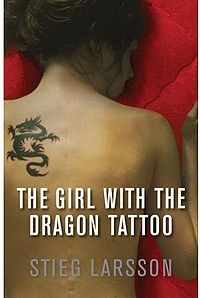 Judging by the number of people I’ve seen on the train reading Stieg Larsson’s books in the past two years, I know I’m late to the party on this one. The Girl With The Dragon Tattoo is this first of Larsson’s three published novels starring character Lisbeth Salander, an emotionally troubled woman who has a gift for computer hacking and digging into secrets she shouldn’t know. Mikael Blomkvist is a magazine editor recently convicted of libel who is contracted to ghost write the autobiography of a reclusive former executive of one of Sweden’s wealthiest family businesses. But the family has secrets that span seventy years, and among those is a murder. Doing the research pulls Blomkvist and Salander together and puts both their lives in jeopardy.
This is one of those books that you can’t put down, and that’s probably why you see everybody reading it, even the people who don’t normally read this genre. But it’s not without its flaws. In fact, it has some big ones, that are hard to attribute to a translation issue.
First and foremost, Larsson switches point of views multiple times in chapters. Sometimes in a single paragraph. This is not a style issue, it’s a mistake editors should have caught. At least half a dozen times I had to go back and reread passages to see who was thinking what. Similarly, in stretches of dialog, Larsson fails to attribute dialog when multiple people are in a conversation, and you have to infer who said what. Maybe that’s a European thing, but I have to believe its just a mistake that could have, and should have, been corrected.
This is definitely one of those books you talk about with other people once you have both read it. It’s also one of those that makes you want to go and visit these places to see where things happened. The description of Hedeby Island is wonderful and it sounds like a great place to at least visit.
Despite the mechanical issues with Dragon Tattoo, I am very interested in reading the next book in the series The Girl Who Played With Fire, and am saddened by the fact that Larsson died before he could many more in the series. The story is engrossing and the characters well done.
Even if you don’t read a lot of crime fiction, this is something you should read. Enjoy it. I did.
I’m a big, big John Scalzi fan. I started reading his blog and his books in early 2010. I haven’t read all his books yet, but I’m getting there. My latest read from his collection is The Android’s Dream. The murder of an alien diplomat puts Earth on the verge of war and likely eradication, and it is up to one man to find the key to preventing an untimely end to the human race.
This is 100% science fiction. With a dozen alien species discussed, gigantic space ships and a futuristic earth, it can’t be classified as anything else. If you don’t like science fiction, you won’t like this one. But if you do like science fiction, you probably will like this one. I say probably, with just a little hesitation. If you are a dedicated Scalzi fan, you will like it. It’s pretty typical Scalzi, with his usual brand of acerbic wit, deep characters with multiple layers of motivations, and a complex plot. There are political undertones in here as well – or at least what might be classified as social commentary. I’d be lying if I said I understood or picked up all of them.
My hesitation comes as a recommendation for people who have never read Scalzi before, either his books or his blog. If you haven’t read (and liked) Old Man’s War, then start there. And read Agent to the Stars first as well. This is a harder book to read, and if you don’t know there will be a reward at the end, you may get a little frustrated. It’s a complicated book, with a lot of characters and a very intricate plot. There’s a lot of things in motion, and at times I felt a little dizzy reading it.
Overall, I liked this book, though not as much as the rest of Scalzi’s work. The complexity of the story works against the excellent characters, and there are some tangents in the backstory that seem a little unnecessary. I skimmed through some of those. But the plot is indeed unique and confirms that Scalzi is definitely one of the best writers out there.
I think I wrote less this week than I have in any week in the last two years. I’m not exactly sure on that, but since I have no active work in progress, I am strictly in a planning phase for my next book. I refined the synopsis, brain dumped facts and figures for the world I am building, and tried to organize my thoughts on the plot and the characters. I have a few more days of planning before I dive into the opening chapter. I’m going to discuss the concept of the novel with my writing group tomorrow night to see if they can poke holes in it before I get going. I’ve never done this before – run the plot by people before I write. We’ll see how it goes.
I’ve also been re-reading The First Five Pages by Noah Lukeman. This was one of the first books on writing that I read after the 2009 PNWA convention, and is still a book I consider the most helpful for a beginning writer trying to figure out how to dramatically improve their craft. I’m actually pretty proud of how many of the lessons it teaches that I now consider second nature when I write my first draft, so the second read of it is not taxing my memory or demoralizing me. Rather, it’s a confirmation that I’m on the right track.
Nothing new to report on the agent front for The Forgotten Road. I did confirm that the agent I sent the novel to had, in fact, received it. I don’t expect anything before the end of January.
Lisa finished reading Army of the Risen this week, and the review was generally positive, though it seems I need to add more words to it to help develop the characters further. I think I overcompensated from the mistakes I made in TFR. We’ll see if my other reader’s agree. But having to add words to a novel is a new thing for me.
Speaking of other readers, one of my writer’s group, Benjamin Newland, now had a web site of his own. I recommend you go check it out.
This is probably the last blog entry for me before Christmas. Merry Christmas, everyone!

 Joe Beernink