
This is one of those lazy, hazy, summer weekends. Run a few errands. Pull a few weeds in the garden. Cut the grass. Play some video games with the kids. Read a book or two. Watch a movie. It’s time to rest, and to relax. Perhaps even to chill.
Because there won’t be another one like it for the next two months.
The PNWA convention is next weekend. The following weekend, we have plans, and I’ll have to get ahead on a few other things, because the week after that, I’m scheduled to go back under the knife for surgery on my right foot, and that will mean six to eight weeks of not being able to do very much. I won’t even be able to drive. That’s not relaxing time, even though I’ll be inside, on the couch most of the time. It’s recovery time, and judging from the surgery I had last spring, I don’t expect it to be incredibly useful time.
So I’m going to try not to think too much more about it right now, and to just enjoy the weather.
So while I’m being all lazy, what are you doing?
The 2011 PNWA Conference is less than a week away now. If you haven’t got your tickets yet, check out www.pnwa.org and see what you can get.
I’m going to be moderating two sessions this year.
 First, on Friday afternoon at 1:30 PM, I’ll be sitting down with Author N
 ancy Kress talking about how to Write Successful Science Fiction and Fantasy. Nancy is the author of the Hugo and Nebula award nominated book Beggars in Spain. I’m hoping the close proximity to her allows some greatness to rub off on me.
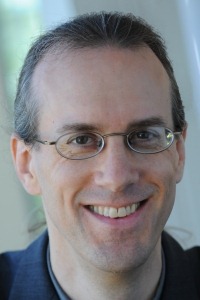 On Saturday at 1:30 PM. my good friend, Book Doctor Jason Black will be talking about Showing and Not Telling. Jason usually has very good presentations, so my job here will be to make sure he has hot tea to keep his voice going for just a few more hours.
Jason is also the author of Blood for the Pharaohs, a children’s chapter book penned as Jerome Asher.
This will be the first year that I’ll be attending and not looking for an agent, so that should alleviate some stress. But I will also be staffing the book sales desk for a bit, and helping out at the Pitch Doctor desk. I’m pretty busy this year, but really looking forward to getting going.
My niece, Morgan, who is 14, will also be attending the conference, and I’m hoping to introduce her to a few people to help launch her career.
If anyone needs someone to talk to at the conference, look me up. I met my agent at the conference, and know exactly what it’s like to be pitching. I’ll try to give some helpful pointers.
I can’t say often enough how important it is for a writer’s career to get involved with organizations like the PNWA. Without the PNWA and the guidance and the help received over the past three years, I never would have gotten to where I am today, and probably would have given up on writing. If you are serious about writing, you need to get out and go to the conferences like this. Volunteer often. Make contacts. Hang out at the bar in the evenings. Talk to people in the halls. Exchange business cards (You have those, right?). Follow the #pnwa hashtag on Twitter. If you see me there, say hi! I love to talk about writing.
I can’t wait for the energy the conference always delivers into my writing soul!
 I’ve read a lot of Bernard Cornwell’s books over the last few years. I love learning about history by reading fictionalized accounts. I don’t usually worry about the accuracy of how Cornwell portrays certain historical figures. If I really wanted to know about King George or General Wellington, I would read a biography. Cornwell’s strength is in the details of battle and the strategies and tactics used during each era. He puts his own characters in the field of battle, and the real historical figures are somewhat off stage but still relevant to the story. You learn history through the observations of junior officers.
The Fort is a different kind of book. It’s set during the American Revolution, at the battle of Majabigwaduce on the Penobscot River in Massachusetts in the summer of 1779. The British have returned from Nova Scotia after being pushed out of Boston, and they are determined to restore order to the colonies by making a landing in this remote harbor, often referred to as Majaduce. They land and begin construction of what would become Fort George, led by Brigadier-General Francis McLean. It isn’t long before the American Navy, along with the Massachusetts Minutemen arrive to try to repel the invaders.
What follows is Cornwell’s very thoroughly researched account of the movements of ships, men and artillery through weeks of battle. Unlike other of Cornwell’s books, the characters are (for the most part) all actual historical figures, including Sir John Moore (of the Charge of the Light Brigade fame) who went on to form the famed British Light Divisions, and Paul Revere (he of Longfellow’s poem). There are fictitious characters in the book – many of the enlisted men in both the British and American Army were made to order for the novel. But the the focus in this book is the strategic decisions (and indecisions) made by the senior officers on both sides that led to the worst defeat in the history of the US Navy (at least to that point).
The book starts off a little slow because Cornwell has to introduce so many characters and their motives. Around page 140, the story really takes off as the battles begin, and the impact of the characters composition really comes to life.
I’ve never studied a lot of American Revolution history. I grew up in Canada, so we spent a lot more time discussing the defeat of the Americans in the war of 1812 than that misguided little insurrection thirty some years before. I had never heard of this battle, nor knew anything about Paul Revere other than he had ridden to warn the Americans the British were coming. I never knew he was one of a dozen or more riders that night, and the only one who didn’t finish his ride. (Did Sarah Palin know that?). According to Cornwell, Revere was, to put it frankly, a bit of a prick and a coward, and his actions at the Battle of Majaduce were near treasonous. That part of the story was fascinating.
What I found funny, or perhaps poignant, was that throughout the book, my allegiance was split between both the British and the Americans. It says something about Cornwell’s ability to tell a story that you could be sympathetic to both sides. Perhaps it was only because I grew up in Canada that I could cheer for the British. Maybe it’s because all the other books of Cornwell’s that I have read have been from the British perspective, so I know how those soldiers fought and have already seen them die by the hundreds. Or maybe it was because most of the American leadership was pretty much incompetent in this battle and didn’t deserve to win.
One of my favorite parts of any Cornwell book is to read the Historical Notes at the end to learn what was true and what he had made up. This book was no exception. The notes are fascinating and make me want to journey to that part of the country to see the place for myself. Unlike some of the battles in the Sharpe’s Rifles series which take place in India, this is a trip I may actually be able to do someday. I envy Cornwell’s ability to research these episodes of history and to spin a yarn about these real events that draws the reader in and makes them want to learn more. Cornwell is one of history’s best teachers, and everyone should sit up straight and take very good notes. There will be a test later.
Becoming an author these days is so much more than just writing. Let me rephrase that. Becoming a successful, published author these days is so much more than just writing. You need to be be better at editing than ever before because the publishing houses have so few resources available to do that for you. You need to know how to find an agent, or failing that, know how to self-publish. Writing the book is the easy part of making it big. The hard part starts when you write ‘The End’ on the book, and sign your name on an agency contract.
That hard part is going from an agented writer (Point A), to a writer with a book deal, to a writer with a successful book, to a writer with a loyal following and a successful second and third book (Point B). Getting from Point A to Point B becomes as much a story about your ability to market yourself and your writing as it is about your writing itself. How you go about doing that, is called your platform.
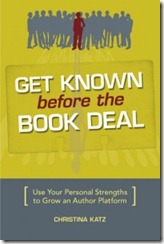
Get Known before the Book Deal by Christina Katz covers how to build this platform from the ground up, explaining what it is, when you should start, and a few strategies to try in order to make your platform stand out.
Your platform is more than just a web site and a Twitter account that relentlessly sends out self-promoting tweets. It about doing the little things, like adding a professional and consistent signature to all emails you send out, to finding ways to become more involved in local volunteer organizations that either promote writing or promote the subject you are an expert on. It’s about finding teaching (and learning) opportunities where ever they may be. It’s about keeping track of the places you have submitted materials to, and the places you have been published.
Katz goes into a lot of detail about all of these things and more. I should note that she approaches it from the viewpoint of a non-fiction writer, which I am not. Some of the things she suggests, would probably only apply to the non-fiction arena, unless you become well renowned for the topic / location of your fiction books, like Cherie Priest and Steampunk or Arthur Clarke and Science Fiction. I suppose any fiction author could teach about Science Fiction, but it would be difficult for them to teach about science, unless that was also their background. Non-Fiction writers have the benefit of generally being experts in their field, and can gain readers by teaching at conferences and schools.
Also, non-fiction usually involves writing a book proposal and getting a deal based on that proposal. Writing fiction involves finishing and polishing a book before you start looking a for a deal. The idea of building a platform three years before you start writing your fiction book would be a little silly.
However, I do agree that fiction writers should begin to build their platform as soon as they know they are going to write. Your platform at this stage may only be volunteering at a library or a conference, but you’d be amazed at how well those pay off. Getting your name out there and recognized, building up a mailing list, and making contacts at bookstores is invaluable.
There is great value in a book like this for writers in all genres. Some of the sections were a little bit slow and repetitive. I skimmed a few areas that went over teaching at colleges and the like, since I have no desire to teach and know for a fact that I am a horrible teacher. I don’t mind doing presentations or speeches, but I haven’t got the patience or the attitude to be a good teacher / mentor.
I consider myself very technically literate, and have already adopted a very professional, business like attitude to writing, so a lot of what she was saying was preaching to the choir. But I did extract grains of knowledge from it that I will / already have put into practice in the last few days. There were some things I just wasn’t doing yet, and I was blowing great opportunities to build my platform while at the same time doing other things. For those suggestions alone, I believe I got my money’s worth from the book.
So if you are a little tired of reading books on show versus tell, or narration, or grammar, and want to go from hoping you will be a success, to having a plan for success, this is not a bad place to start. Just remember that the publishing world is changing incredibly quickly right now, and you need to keep up with it. Reading one book isn’t enough. It’s just a beginning.
 I picked up this book at a grocery store while on vacation in Canada. I had read myself through the book I had planned to keep me busy for the entire trip (Jasper Fforde’s The Big Over Easy). The store had a very limited collection, and I was in a big hurry. The front cover looked pretty good. I thought this was a straight serial killer-murder mystery. Was I ever wrong. I should have read more of the back cover.
Warning, there are spoilers ahead.
The novel is presented as a true story, being written by the friend of Mackenzie ‘Mack’ Philips, a software developer living in Oregon, who endures a great family tragedy of losing his youngest daughter to a serial kidnapper while on a camping trip into the Hell’s Canyon region of Northeastern Oregon. It starts with Mack trying to get on with his life after the kidnapping. On an icy, snowy day, he receives a mysterious note from ‘Papa’, a nickname his wife has given to God. Papa wants Mack to meet him at the shack where his daughter was presumably killed. When he arrives there, he is greeted by God (Papa / Elouisa) and Jesus and the Holy Spirit (Sarayu). Well over half of the book covers three days of talks between Mack and this Holy Trinity, where they discuss everything from organized religion to pain to suffering to revenge. Mack must confront his distrust of God, and the constant question of how a loving God could allow his daughter to be taken and killed.
The first thing to know is that though the forward of the book says this is being written by Mack’s friend Willie (who is, coincidentally, presented as the author), the cover says ‘fiction’ in very small letters. You may think this is a true story, and feel genuinely sad for Mack… no parent should go through this type of sorrow… but this ‘telling through Willie’s eyes’ is nothing more than a plot device. It wasn’t confusing, as it was easy to keep things separated, but once I grasped that this really was fiction, the device felt cheap and weak.
The concept of the story is not bad. It’s a lecture on Mr. Young’s personal belief system, something he probably worked on for years to arrive at, told in a parable. The back story is that he wrote this book as a gift to his six daughters for Christmas one year. From there, friends suggested that he self-publish it. Then, word of mouth spread and it hit the New York Times best seller list. It’s what all writers want to have happen.
But the book didn’t hit #1 because it’s a well written book. The writing could have used a serious edit, and the dialog constantly made me cringe. The dialog – which in this format uses conversations to relay Young’s beliefs – has to be more believable. People, and I’ll even say Gods, wouldn’t talk this way. It’s been a long time since I’ve read dialogue this poorly written, and I ended up skimming long sections of it because it was like reading a very dull sermon.
The book hit #1 because its perfect fodder for a certain segment of society – the evangelical right. Oddly, it’s been both praised for its unique view of man’s possible relationship with God and condemned as heresy because it paints such a weak, humble picture of the Christian God. What you think of it will depend on where you sit in the religious spectrum. Some people have found the book life changing, and praise it, others denounce it and want to burn it. I’m rather ambivalent about the message. My religious beliefs were formed long ago, and this book didn’t change them.
I honestly think that this book could have been better, if it had been better written (um… of course). What I mean, is that a good editor could have really helped it by fixing the mechanics of the writing. I disliked book mainly because it was poorly written, but also because it was dishonest, trying (through the aforementioned plot device) to convince the reader this was non-fiction. I felt used and lectured to, instead of entertained. It’s not something I would recommend to anyone, religious or not. Writers have a contract with the person when they buy the book, and part of that contract includes honesty in the pitch.
Having said that, had the pitch been honest, I probably wouldn’t have picked up the book in the first place. It wasn’t my kind of story, and definitely wasn’t what I was in the mood to read. It was in the wrong display at the store. It should have been in the aisle labeled Christian propaganda, not fiction.
But I’ll take the blame on this one, for not reading the cover closely enough. A lesson learned for next time.
I’m currently reading a book about building your writing platform. A writing platform isn’t a physical structure per say – its your marketing base; your audience’s perception of you as a writer, how they find you, and how publishers evaluate your marketing base when you come to them with a book. It’s a lot of work to do build this platform, and do it well. The author of the book points out that between 200000-400000 books are in print every year, and something like 73% of Americans want to write a book. Those are daunting numbers for a new author to face and then to overcome.
After reading those numbers, I asked myself a question as I got off the train.
 If I never got published – never made a dime from writing – would I continue to write?
My immediate answer was yes. I love to write. I wrapped up my last project a week ago, and I promised myself I’d take the summer off. In the week I “haven’t been writing”, I’ve written four book reviews, and am now on my fifth ‘non-review’ blog entry (if you count the one I did for work). And they haven’t, in general, been short reviews or entries. While I was on my way home from work yesterday, I wrote down half a dozen ideas for more blog entries, and one idea for a short story.
Right now, I don’t think I can stop writing.
I love the clicks this keyboard makes when I write and I love to see the cursor move forward as I type. When I write on the train, I love how the time just disappears, and the thirty-five minute ride seems to go by all too fast. I’ve considered riding the train back home and coming back in on the next one, just so I can write more.
But how long could I really keep up this pace? Do I have enough story ideas in my head to write for the next five years, every day? Yes. I’ve got outlines for seven books either written down or deep in my brain, not counting the five I already have written that need ‘finishing’. That’s a minimum of six more years of work at the pace I normally write. And it’s not like I’ve stopped coming up with ideas.
What about ten years from now? If I never got anything published, would I still be writing? Let’s pretend for a moment that I’m not smart enough to figure out how to self publish. If there was no market at all for my books, would I be frustrated enough to quit? Maybe. But then what does that say about who I am writing for? Am I writing just for readers who may or may not like my stuff, or am I writing (in large part) for myself because the stories are just there and can’t be left alone? Am I writing because to not write would seem like a colossal waste of, dare I say it, talent? Do these stories in my head demand to be written, or is my brain demanding that they exist? How can I take a short, one word idea for a story, and turn it into 80000 words? Was the story always there just looking for me to turn the key and unlock the door, or did my brain say “there is a story behind that word, let’s see what it is”?
I think it’s a little of both. I started writing again in 2008 because I couldn’t waste my life, travelling back and forth to work on that train like some kind of automaton, doing the same thing over and over again, and not seeing anything good come out it. Staring out the window and looking at the same rail corridor every day would make me terminally sad. But there are days now where I go to work so I can write on the train, and the work day is just a byproduct of that trip.
It’s taken me quite a while to get from the point of measuring success by whether or not I get published, to measuring by how much each book is better than the last, to just enjoying the process. I didn’t think, a week ago, that I would honestly miss writing that much. I worried, just a little bit, that not writing for a couple of months would be the end of my career – that I would get lazy and not want to do it anymore.
Now I know that’s not an option. I’m looking for more opportunities to write. I was just talking to my wife about possibly freelancing some magazine articles or newspaper work in the future. I briefly entertained the thought today while I was in a bookstore, of writing a technical book on the stuff I do at work, or at the very least a whitepaper or two. Maybe that’s just crazy talk and I’d better get back into another novel before I commit myself to some technical book that will drain the life out of me.
But then again, maybe it wouldn’t be that bad… if I could get paid to do that… for a while… I could write all the time…
Somebody stop me.
I posted a book review yesterday over on my other, slightly neglected blog site DevScape for a technical book called The Nomadic Developer by Aaron Erickson. The book, and the blog, are both worth a read if you have any technical interests .
I generally won’t post links to technical articles I write here (I can get very geeky), but since it’s a book review, I’ll make an exception, just this once.
On Friday afternoon, my wife loaded up the kids and headed over the mountains to my in-laws for the weekend. For the first time since my kids were born four and a half years ago, I had the house to myself for the weekend, and wasn’t working! I also had no writing projects I needed to get done, and no project around the house I needed to take care of.
In short, I was a bachelor for 48 hours. Par-tee time!
Well, not really. I barely left the house, except to get groceries and cut the grass / pull a few weeds. I did lots of laundry. I had intentions of going for a bike ride (something I used to do a lot of when I lived in Colorado back in the 90’s), but a fairly constant drizzle nixed that idea. I lifted weights instead (twice), something I’ve been neglecting the last few months.
The rest of the time, I vegged. Actually, I power vegged. I watched / finished 5 movies (thus far) including:
- Harry Potter and the Half Blood Prince –Very good
- The Parking Lot Movie – okay… kept thinking of two of my brother-in-laws while I watched it
- Ip Man 2 – Fight scenes were tremendous, but I couldn’t help but compare it to Rocky 4 and the propaganda of US-USSR from the 80’s now being used for China vs ‘The West’
- The Black Death – First half, very good, but second half weak
- Harry Potter and the Deathly Hallows – Part 1 – Very Good
I also caught up on all my missed episodes of Deadliest Catch.
I ate like a bachelor (frozen pizza one night, barbequed steak sandwich the next) and enjoyed a couple (okay 3) beers. I’ve been unable to find my old standby at the grocery store lately (Labatt’s Blue), and have been wandering through various types of micro-brews. I finally found one I like: Fire Station 5 Golden Brigade Blonde Ale. Definitely a pick-up-again kind of taste.
I did spend a good chunk of the weekend reading a book for work – The Nomadic Developer by Aaron Erikson. I’m not going to review it here, since it’s more of a technical / day job career book, but I will probably put something on Devscape when I’m done. I’ve got quite a bit of technical reading to get done in the next couple of months, and I really enjoyed this one.
It’s completely weird not having the kids running around the house. Yes, I do miss them. Part of me considered myself a bad parent for wanting a down weekend to myself, but I’m realizing that I really needed a recharge. I was always tired, and getting grumpy with the kids, and it wasn’t them — it was me. Between travelling a couple of weeks ago, and having to work last weekend, and working a few longer days the last couple of weeks, and trying to get my secret writing project done, I hadn’t had a chance to just sit down for a few hours in my own house in a couple of months. I really needed a break, and am so thankful that I got one. Hopefully this shows up in both my attitude towards my kids, and in the energy for my job in the coming weeks. I highly recommend it, and hope I can somehow allow my wife to do the same before the end of the summer. As I write this, it feels like this giant weight has been lifted off my shoulders, and I feel good for the first time in a very long time.
As for the rest of the day? Maybe some more reading. Maybe a video game. I’ll wander down to the mailbox and get the mail (if it ever stops raining). Maybe even another movie. Something light like IronMan 2. Maybe a nap. I’ve got about 4 hours left of bachelor life, and I’m going to make sure I don’t do anything stupid to wreck this vibe.
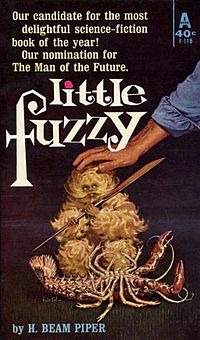
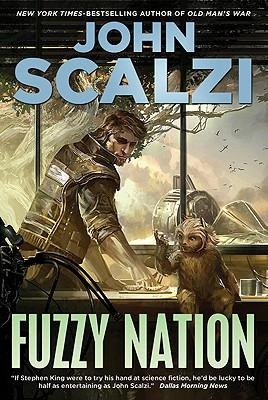 I will admit that until John Scalzi wrote Fuzzy Nation, I had never heard of Little Fuzzy or even H. Beam Piper. Piper wrote Little Fuzzy back in 1962 and was nominated for a Hugo Award. As the story goes, Little Fuzzy was one of John Scalzi favorite books of his younger years, and when another writing project fell apart, John decided to reboot this series for fun. This is not a sequel or a prequel, but a different take on the premise of the original story, updated with a more modern twist, and told the ‘Scalzi’ way.
I read Fuzzy Nation first, because a) I’m a big John Scalzi fan, b) I got the book at his Seattle appearance on his book tour (but did not get it signed because I had to get home to relieve the baby sitter). I read Little Fuzzy shortly thereafter on my iPhone. It’s in the public domain and available for free from Amazon Kindle, and I still don’t have a Kindle. Reading a book on an iPhone is still not a completely enjoyable experience, but I’ll try not to let that affect this review. I’ve covered that before.
Both stories center on a prospector name Jack Holloway, on a remote planet called Zarathustra, searching for precious gems called Sunstones. The planet is a Class III planet, which means there are critters of all sorts (many of them dangerous), but nothing that is sentient. A mega-corporation runs the planet to exploit it for all of its resources. The last thing the corporation wants to have happen is for something to be discovered that puts their claim in jeopardy. But Holloway does just that when he finds the Fuzzies, or rather they find them.
The concept for both plots is nearly identical. The resolutions are not. The characters, outside of Holloway, are substantially different. In Little Fuzzy, Jack Holloway is older, filled with a quiet authority and a long history of prospecting. In Fuzzy Nation, Jack is younger, and has far less experience, and has a very complex past. The language used by the writers is very different. I’d compare reading Piper’s work to reading the Hardy Boys, full of outdated colloquialisms and stilted dialog. Scalzi is at his best when he writes conversations, and the rapid fire exchanges of conversation are both witty and poignant. The plot of Fuzzy Nation is more complex as well, with plenty of twists and turns that Scalzi is just a little better at presenting to the reader.
Both books are quite short, and very fast reads. You could easily read both in a day – in the same day – if you wanted to. I don’t recommend that. Both are very good books, and should be savored. I liked Scalzi’s just a bit better, but I will give Piper his due for coming up with the story in the first place, almost fifty years ago. Piper’s story is quite readable, and since the plots differ significantly, you won’t lose anything by reading both. Order doesn’t matter either.
This ‘reboot a book’ idea is a new concept for me. Movie studios do it all the time now, but it seems like rebooting a book, oddly, would be a lot of work. I worry that opening this avenue up to less talented authors could result in a deluge of ruined memories of the books of my childhood. But Scalzi does this really well, and respects the original work. It’s an homage, not a lazy man’s way to generate revenue. I applaud him for it, and it has opened my eyes to another author from the past who I will try to go back and read when I have the time.
It’s been nearly a month since my last true status update on my writing. But don’t worry, I have plenty of excuses for not giving you the news I know you want to know.
1) I’ve been working on a super secret project that has consumed all of my allotted writing time. Blogging fell to the bottom of the list. The project is done now, but I still can’t talk about it. Hopefully someday soon, but don’t hold your breath.
2) I took a trip to Canada to see my folks. It wasn’t a long trip in duration, just 6 days, but it was a long trip in terms of travel hours. I did use the time in the air wisely though. See #1.
3) I’ve been re-reading the entire Harry Potter Series. In fact, I finished The Deathly Hallows last night, and will be watching Half Blood Prince and Deathly Hallows Part 1 this weekend on DVD. Then next weekend, I’ll be already to see Part 2 at the theatres. I haven’t been reviewing the books since I’ve already read them (and so has the rest of the world it seems), so I just read them for enjoyment. What a pleasure to read! I’m glad I have them all in hardcover, because I have no doubt I will read them all again in a few years, and can’t wait for my kids to try them.
4) Work. As in my day job. Yes, sometimes the things that pay the bills get in the way of blogging. Horrific, I know. But it happens.
5) I was kidnaped by aliens and… no, not really. Just checking to see if you were paying attention.
So there are my excuses. I trust they’ll suffice.
As for what’s coming up for my writing? I honestly don’t know what I will work on next. I have five novels and one novella that are in some sort of draft complete state, and four of those are in need of major edits or complete rewrites before I can pass them off to my agent. I’m not sure which one I may tackle next, but I’m probably going to take most of the summer off. Since I like lists, here’s why I’m setting my goals low for the summer:
1) The PNWA Conference is August 4-7 and I’m doing a lot of volunteer work there. I’m also expecting to learn a few things there as well, and that usually results in much better writing after the conference. If you are going to the Conference, be sure to follow me on Twitter (@joebeernink) or follow the hashtag #PNWA. Or track me down (ask for me at the conference desk if you don’t recognize me, and let me know you read my blog.
2) I’m having some more surgery done in August on my right foot. Last spring, when I had the left foot done, I expected that I would have all kinds of time to write while recovering. That did not hold true, as recovering was, well, tiring, and I still had to work my full day job schedule. I’m going to set no writing goals during this period, and hopefully that will take some stress off my body and allow for a faster recovery.
3) I’ve got a lot of reading to do. In fact, here is a picture of the shelf that had all the books I have bought over the last few months/years that I have not read.
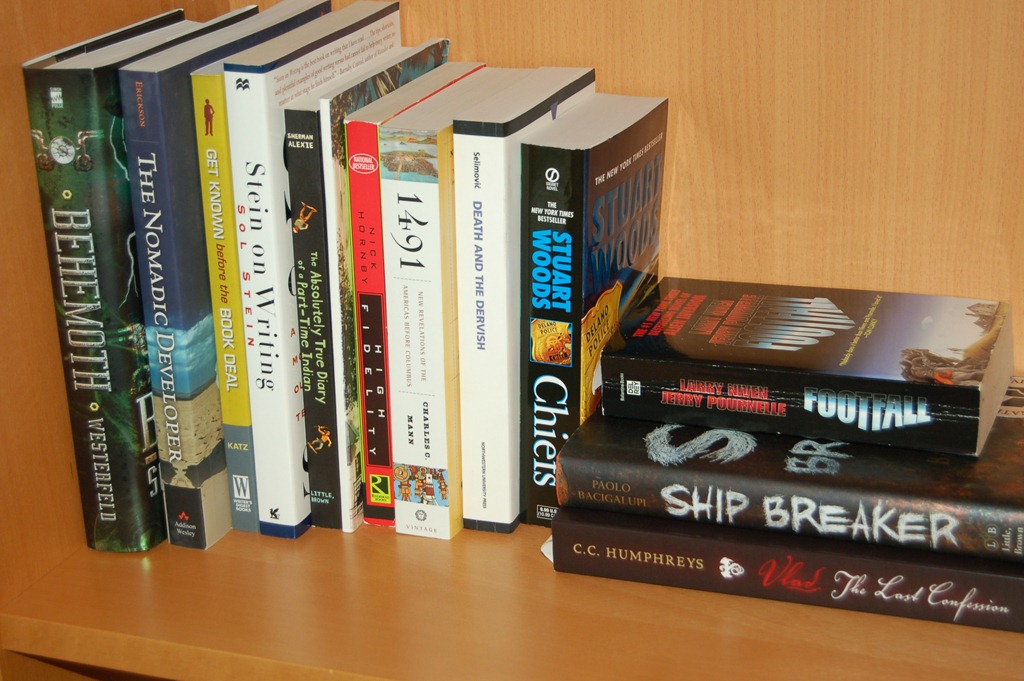
This does not include the books I want to re-read this year, like Dan Simmon’s Hyperion series, and Kim Stanley Robinson’s Red Mars Trilogy. I’ve also got a couple of books to read for work, and a bunch of books on my wife’s Kindle that I have yet to read.
4) I’m a little burnt out on writing. Not burnt out in the sense that I never want to write again. I want to be able to write every day and I miss it when I am not writing. But in the last 35 months, I’ve written four novels and that novella. None of these experiences was exactly easy, and each one took a number of very intense edits just to get them where they are now. I need a little distance from those stories. That distance refreshes my mind. I don’t want to start a new story now. I want to refine those other ones and get them out the door.
If I write anything in the next two months, it will probably be short stories that I will post here. It’s been a long time since I’ve written short fiction, and I’m looking forward to seeing if I can control my brain and put a story out there that doesn’t take 80,000 words to tell.
I expect to be blogging more frequently in the next few months as well. With the conference and the book reviews I do, I hope to ramp up my blog output to a couple per week, if not more. Check back often (or follow me on twitter) to see what’s going on.
And if you have any questions for me, feel free to send me a note. I’ll do my best to answer them.


 Joe Beernink