
One of the things I’ve been working on the last couple of weeks is a marketing plan. I’m still in the earliest days of that, but beyond setting up this blog (which if you go back to my Cranium Outpost days I’ve been blogging on since 2006), and Twittering, there’s not a lot an author can do to attract interest without actually publishing something.
But one of the things I did want to do was to make sure I had control over key things like my domain name (check), and my Twitter name (@JoeBeernink) (check) and now my Facebook Fan Page, which you can now see here.
There’s nothing spectacular going on presently on any one of those places, but each step establishes my base, and, as I find new tools to gain legitimate followers, allows me to present a greater audience to perspective publishers. Publishers want to know that you already have a network of people who want to read what you write, and that you have a professional plan on how to grow that base. Writing is artistic. Publishing is a business. Anything I can do that helps to increase my visibility in a good way and to improve my chances of not only getting published, but increasing the demand for what I do, I’m going to try to do it. Being aware of social media is not optional in this day and age. It’s required. So even though it seems a little weird to set up a fan page before I have any fans, it’s something I think is necessary so as to present a consistent, professional image going forward.
We’ll see how it turns out.
My writing updates lately have been a victim of events in my life. In my last update, I lamented how I was falling behind because my kids were sick and I had just had a bunch of dental work done. Well a day later, I got the nasty bug, and that floored me for almost a week. Of course, I had the MAN version of this bug, which isn’t to say that what the kids had wasn’t bad, because it was horrific, but you know, men just get these things worse. It’s a law of nature.
It took me until the middle of last week to get through the major edit of Army of the Risen I was working on. I ended up pulling out four complete chapters, and writing one new one. I also moved a major reveal from the last chapters to earlier in the book, as my readers had a hard time understanding the book without it. Overall, I think the edit was quite successful. It’s amazing to me to see how much my writing style changed (and improved) between the first half of the book, written in spring 2010, and the second half, written in fall 2010 after working with Jason Black on The Forgotten Road. Jason’s feedback taught me so much about writing, and I still highly recommend his services for any author who has plateaued in their writing.
I then spent a few days working on some writing career plans, laying our goals for when I plan on writing what, and working on marketing plans for both myself and my books. It’s an exercise in futility to plan to far into the future, because I know the gods laugh at people who make plans. But the process of setting out those goals helped me to work through some things, both practical aspects of writing and life in general, and doing it helped me to transition from someone who just writes for enjoyment with a hope of it maybe becoming something someday, to someone who now considers writing to be part of my professional career, where in the not too distant future there is the possibility of it turning into something that generates, dare I say it, income. Whether that be writing short stories or magazine articles or more books, time will tell. I just now know where I need to focus my energy and have some idea of what I need to do to turn my dreams into reality.
For the last few days, I’ve been doing one more read through of Army of the Risen. I was going to shelve the whole book for a few months and come back to it with fresh eyes, but something in one of the chapters bothered me enough that I had to know how the book read as a whole. This pass was much quicker than the last one, and I believe the book is much , much better than the original version. I sent it to my wife’s Kindle last night, so at some point I imagine she’ll give me feedback. Then, we’ll see.
As for what’s next, as I said, the gods have a way of laughing at those who make plans. I was going to resume working on my next book, Labeled, but something tells me that may not be in the cards. I’ll decide this weekend. For now, I’m going to take a couple of days off, read a couple of books, and take care of some stuff around the house. Because there is always more work to do there.
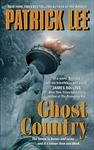 I’m usually pretty careful about picking up books and making sure that I start from the beginning of a series. Usually. But I read a review of Ghost Country on a web site somewhere (I think it was mentioned on John Scalzi’s blog a while ago), and I put it onto my Amazon Wish List, and then one day added it to my cart. Next thing I know, I’m a ways into it, and I’m wondering why these people all know each other, and what is this other incident they’re talking about. And then I flip to the front of the book and find out that Ghost Country is the second book in the series by Patrick Lee, and was preceded by The Breach.
What’s interesting is that I didn’t put the book down and tell myself that I needed to read The Breach first. Lee does an admirable job of letting you know enough about what has happened in the first book to allow you to read the second without too much confusion, though I ‘m sure reading them in order would have helped at least a little. Anyway, any confusion I felt was certainly my fault.
Ghost Country is science fiction with a Tom Clancy twist. It’s high concept. The world is about to end unless Travis Chase can figure out how to stop it. The science fiction part is due to the presence of The Breach, a barely understood hole in the world that allows mysterious objects to come through from either aliens or another dimension. Some of these artifacts are useless. Some do something, but no one can figure out what. And some let you see 80 years into the future, where the earth has been ripped clean of living people, and the cities resemble something straight out of the TV series Life After People. Basically, it’s post-apocalyptic, but there are no survivors. And by the way, Travis only has 4 months to figure out how to stop this all from happening.
It’s a fast read, and one you might want to read on an airplane or on a beach. It’s not incredibly deep or thought provoking. The science part of the science fiction is borderline. There are a few scenes that strain plausibility just a bit, but since we are talking about a hole in the world where stuff comes through from aliens, plausibility might have already been something as readers we weren’t too worried about in the first place. It’s an enjoyable book for the most part, and I will be tempted to read The Breach when I get some time to see how all this wackiness started. There were a couple of parts near the end that caused me to furrow my brow with doubt, but if you can get past that and just read for fun, I think most people would enjoy this one.
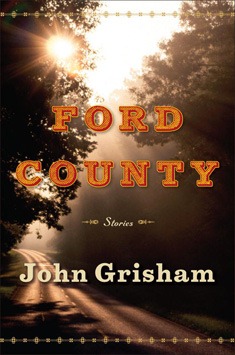
I’ve read a lot of John Grisham in my life. I think I’ve got all of his novels on my shelf, but I may have missed one or two. I’ve always loved his writing style. Its easy to read, the characters are either likable or hate-able, depending on what he’s going for. The plots fly by. They’re great airplane reads, and usually, on a cross country flight, I can pretty much read one of his books end-to-end.
Ford County is a collection of Grisham’s short stories – seven in all – all tied to Ford County, Mississippi and Grisham’s fictional town of Clanton, where there seem to be more lawyers than people, and all of them up to no good. There’s stories about the family of a death row inmate, another one about a trio of bungling yokels who try to head to Memphis to donate blood to a local boy injured in a construction accident and the three end up in an amazing amount of trouble. Each story stands alone, and each one is written in Grisham’s easy going style. They’re all quick reads, and well done.
That said, I hesitate to recommend this book for one reason: every one of these stories is depressing. None of the main characters are very likeable. I held out hope as I moved from one story to another that one would make me laugh or be fighting on the right side against insurmountable odds. But after each one, I just sank a little bit. Sometimes you read something, and the outcome is poignant, and even though the book was sad, you still get something out of the story. But with these shorts, I never got that.
If you’re a Grisham fan, and have read everything he’s written, then by all means, go ahead and read these stories. But don’t expect to feel good at the end. You won’t.
 When I sat down with Stieg Larsson’s The Girl Who Kicked the Hornet’s Nest, I expected it to take me a week or so to finish. I got it in hardcover around Christmas (which I almost never do) by accident when I clicked the buy button on Amazon.com without checking to see what edition I was ordering. Oops.
My wife and I had just watched the the Swedish version of The Girl Who Played with Fire the night before I started reading and I was anxious to find out what was going to happen next. Like I said, I expected to read it over the next week or so, because it is long (550 pages) and because it’s heavy. I wouldn’t be hauling it on the train with me to and from work.
I never had to make the decision whether or not to bring it to work. I started it Saturday morning and finished it Sunday night. I could not put it down. Every waking free moment of those two days I spent reading. Like the other two books in the series, it’s a great read, continuing the story of Lisbeth Salander and Mikael Blomkvist, starting from just moments after the end of the last book. It had me right from the start of the story and kept me in it all the way to the end.
I’ve already said my peace about Larsson’s wordy style, and his complete disregard for what the ‘experts’ say about writing and editing. The man knew how to tell a tale despite all that, and once you get used to the excruciating level of detail, you almost begin to like it. I really do wonder if the style guides I have read are all specific to the American culture. I don’t read a large number of books targeted to European audiences (except, you know, for all that writing by Bernard Cornwell that I read). Perhaps the lack of intense procedural driven language is a purely North American thing.
You do have to read the first two books in this series for this book to make any sense. That’s pretty standard with any series. But make sure than when you sit down with this one, you don’t have anything else you want to get done that day. You’re going to be held captive by this story until the end. And you’ll love it.
 As much as any other series in the last five year, SM Stirling’s The Change series struck a chord with me. In fact, I think it was shortly after reading the first few books in this series back in 2008 that I decided to start writing again. Dies the Fire, the first book in The Change reintroduced me to the world of post-apocalyptic fiction that I had first seen with Stephen King’s The Stand. The Stand will always be the gold standard of PA Fiction, at least for me, but I found Stirling’s approach in Dies The Fire unique and a very good read.
The Sword of the Lady is the sixth book in this series. It’s a long book, at over 650 pages, and at times – especially in the first half – it wanders. There are many scenes of two characters telling each other about things that have happened to them in the past, which is apparently for the benefit of readers who read the preceding books a long time before. There are also numerous diversions into the world of religion and witchcraft, and asides to characters not really integral to the plot in this book. Those asides are mainly to show us that life is gong on in the Willamette Valley as the hero, Rudi Mackenzie and his intrepid band of questers travel across the continent in search of the Sword of the Lady, the mythical sword which will grant Rudi the power to save the world.
There were times in reading this book where I was a little aggravated with the pace. Not “throw down the book” aggravated, but aggravated enough that the book wasn’t as enjoyable as it could have been. I found myself skimming pages and wishing that Stirling had been a little tighter on the edit. There were parts that were incredible – that put goose bumps on my skin – and parts that just read, really well. But I really had to fight through the backstory to get to them.
At the end of the book, I was reminded of the end of Stephen King’s Gunslinger Series, where he asks the readers why they read, and why they might be upset if parts are too flowery or descriptive or wandering, and reminds us that we buy the books to be entertained, and not as a race to get to the end so we can say “I’ve read that.” But there is a give and take between the reader and the writer. And in the case of the Sword of the Lady, the writer took a lot more than he gave. It won’t stop me from reading the next one, because when it comes to reading series, I’m a little OCD. But it did remind me that as I write my books, there is a balance between where the writer wants to go, and where the reader is willing to be taken. And when they are out of balance, the experience isn’t as good as it could be.
I wrote one chapter this week. In a book I had already finished. Okay, it’s not done, however I didn’t think I’d be writing entirely new chapters for Army of the Risen. But after cutting out four entire chapters, I wrote a new one. I also edited a bit this week, and am about 40% through this pass now. Hopefully the rest of the book goes faster, because it’s taking an absurdly long time to do each chapter.
I’ve also been handicapped by an extremely unusual schedule this week. Both of my kids have been sick and I had dental work done. And when I say my kids have been sick, it’s the kind of sick that has you up from two in the morning till lunch with a barf bucket in hand waiting on the next projectile vomit. My son is almost recovered after 7 days, and we thought my daughter was, but she resume her upchucking ways yesterday (day 5 for her), and we just hope she can keep the food done. And that dental work I had done? Two crowns and a filling. What a great week.
So I only rode the train in twice this week, and with missing so much work, I spent my home time working instead of writing. Next week promises to be better. And now I’m two book reviews behind (and soon to be a third) if I don’t start cranking them out.
I try to keep these weekly, but sometimes things get in the way. Last week(end) it was my day job, requiring insane number of hours to try to get a project done. Stuff happens, and sometimes the writing takes a back seat to, you know, things that actually pay the bills. Some day, I hope my day job will take a backseat to, you know, a writing career that pays the bills.
I also haven’t been writing much on my newest novel. After getting feedback from my writing group on Army of the Risen, and getting the first three chapters spun into shape for submission to the 2011 PNWA Literary Contest, I decided to plow forward with a complete edit of AotR. It’s a lot of work, but thankfully, it’s different work that what I had to do on The Forgotten Road. There are 3 major plot lines in AotR, and on this edit, I’m moving things around and trying to repair a slow start to the book. I’ve chopped 4 entire chapters out of the first 18 (my chapters are relatively short, so this isn’t as painful as it sounds), and am trying to add more emotion to the story.
The biggest technical problem I’ve had with AotR is my flagrant overuse of commas. Almost every sentence has an extra one and that type of abuse can really affect the reader’s perception of the speed of the plot. Editing commas out is ridiculously time consuming, but it really does change the tone and pace of the story. It’s amazing how removing just a few from a paragraph can turn a very monotonous passage and into a breathtaking adventure.
My hope is that the edit of AotR will consume another 2 weeks or so. Then it’s back to writing with renewed energy. It feels like forever since I’ve been heads down into writing and I really do miss it.
I have been doing some reading lately as well, and have a half finished book review I hope to post sometime tomorrow, but reading also slides when things get busy, so instead of two books a week, I’ll hope for one a month until the summer.
For the last year or so I’ve been hosting my web site on my own server in my house. I built the site using some of the software technology I use at work, partially out of an experiment, and partially to save a little bit of money.
A few days ago, I had a disk failure on one of my computers, and while I was fixing it this morning, I realized that a) while I was working on the server, my site was down; b) I wasn’t entirely sure I had all the firewall settings set properly, and that there was a chance, however remote, that someone could hack into my home network via this web site; and c) The cost of getting the site up and running on WordPress was about $12 a year.
It took me the better part of the afternoon to manually load all of my old posts from my custom site into WordPress, and then to get familiar with the WordPress interface. I can’t say I like the look and the feel of this site as much as I did on my old site, where I had custom made backgrounds, but I think the current style is pretty sharp and easy to read.
I also know that a writer looking for a reason to procrastinate can justify doing just about anything in order not to write, and apparently, I needed a reason today. My first excuse came at 6:15 AM when I realized none of my computers had been backing up for the last week, and one had gone almost a month without a backup. Once you have been through losing a hard drive, an alert that says your backups are failing never goes unheeded. That led to restoring the rest of the files lost in the crash, and then to moving the site,
So anyway, the site is now moved and up, and most things are working, and I may add more features as time goes on.
Tomorrow I meet with my writing group, and we get back to prepping our entries for the 2011 PNWA Writing Contest. I also need to touch base with the agent I sent The Forgotten Road to a couple of months ago to see if they need a little more time. It’s time to do the next major edit on Army of the Risen as well, so Labeled may take a bit of a break, not that I’d got a lot of momentum going on it anyway. It’s around 8500 words, and I keep getting interrupted. I still really like the story, but life (and other books) just keeps getting in the way. That needs to change, soon.
 If you’ve been reading all the book reviews since I moved to this site a few months ago, this book might surprise you. But if you go way back in my archives on Cranium Outpost, you’ll find I have read quite a few Jonathon Tropper books. Still, this genre is completely different from what I normally read. I’d classify as chick-lit for guys. That’s not an insult. It’s what it is, and Tropper writes it better than anyone I’ve ever read. In fact, This is Where I Leave You is probably the best of his books that I have read. I had a very hard time putting it down.
In this book, Judd Foxman, a very non-religious Jewish man, is asked to sit shiva along with the rest of his siblings and his mother after his father dies. Judd’s life is a mess, and there aren’t many in his family who can claim that their lives aren’t disasters too. And now this dysfunctional family must spend a week together in the house they grew up to mourn their father. What could possibly go wrong?
This book has fights, and cars and sex and drugs and manly-men talk. But it’s also got emotion, and Tropper handles that really well. The dialog is superb; funny when it can be, poignant when it should be, and honest all the time.
It’s rare that I feel more desire to read a book than I do to write my own. Perhaps it’s because I’ve been fighting a man-cold this week and don’t feel like doing anything. But I found myself disregarding my normally very strict schedule for writing in order to read more of this. It was the right book at the right time, and when a book is good, all other plans go out the window. And this one is good.
What’s more, my wife liked this book, so it’s definitely not just a guy book. In fact, I believe this is a book my sister would really like, and she and I rarely have similar tastes in anything. If you’re looking for a good book to curl up with for a couple of days, this might just be it. Just know, this is not science fiction, or historical fiction or post-apocalyptic fiction. It’s a good story. Man Up. Read it.


 Joe Beernink