 After reading the previous book in this series, Shadow Puppets, I was a little reluctant to pick this book up. I did it because my wife said it was better, and I have a nagging case of OCD which means no series goes unread once I start it.
Shadow of the Giant is the completion of the Julian Delphinki (aka Bean) storyline in the Ender’s Game series. There is a power struggle raging across the Earth, between India, China and the Muslim world which has been united under a new Caliph, Alai, one of Ender’s jeesh. The United States has turned inward and closed its borders, and kept it hands out of the mess.
But Ender’s brother, Peter Wiggin, still holds the title Hegemon, and while it is a title with little to no influence, Peter is determined to save the world by pulling the right levers at the right time, and catapult the position of Hegemon into a real and true power.
If you haven’t read the rest of this series and slogged through Shadow Puppets, this book won’t make a whole lot of sense. The good news is that this book is better than Shadow Puppets. It has more action and more strategy. Again, Card has the problem of trying to make very smart people make mistakes that lead to their downfall. I’ve recently run into a similar problem, and am only just now coming to grips with how hard that is to do and to hold true to the characters. That’s a blog entry unto itself (and soon will be, I think).
I think the major problem with these books is that there weren’t any characters that I really liked to the point of rooting for them. I wanted to like the like the series as much as I liked Ender’s Game and and Ender’s Shadow, but those two books set such a high bar that anything that follows is surely going to be a bit of a disappointment.
If you have made it through Shadow Puppets, then by all means, read this one to complete the storyline. Chances are you’ve got a little OCD in you as well, and you’ll need to finish the series. Part of me wishes I had stopped at Ender’s Shadow, and moved on. At some point in my life, I’ll go back and reread Ender’s Game and Ender’s Shadow, and I look forward to that. But I think I would have had an even higher opinion of those books is I hadn’t finished the series.
Getting back on the train has paid big dividends for me for writing this week, as has having a reliable computer to work on. I’ve gotten used to the keyboard on the new laptop, and when the words are coming, the computer is completely unobtrusive, which is exactly how it should be.
Word count since last Sunday, by day
Sunday: 2142
Monday: 1253
Tuesday: 1398
Wednesday: 1506
Thursday: 2315
Friday: 1228
Saturday: 984
Today (thus far): 1354
Total words in MSS: 49931
Not a bad week in terms of word count. Fifty thousand is a milestone number, and definitely signals that it’s time to start the run up to the big finale. Which is good, because I’m just about done one of the big conflicts in Act II.
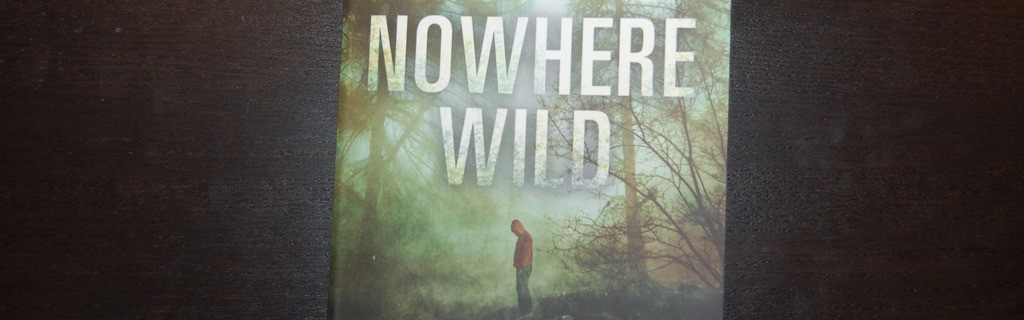
The hardest part about this book is that it’s a lot less about action scenes, and more about conflicts driven by dialog. I’m not used to writing this way, and it’s a complete 180 from The Forgotten Road, where I had a boy alone in the woods, and dialogue only entered the picture through flashbacks. I don’t know how this is going to go over with my readers, and I constantly worry about it. But then again, the area I’ve been told I need to work the most on is my characters, so that they come up to the same level as the world I build for them. The world in this book is small. The characters are everything.
Right now, I’m not sure where the final word count will be. Could be anywhere between 65000 and 85000, which means I’m still somewhere between two weeks and a month from being done. The story is there, in my head, it’s just a matter of getting from one plot point to the next smoothly, and that, in this book, is a lot of hard work.
First off, this is obviously not the normal kind of book that I review here and doesn’t signal a change in the subject matter of this blog. This is also not some signal that I am in some kind of parenting crisis or having trouble coping with two four year olds running around the house. I am also not falling into some cult of parenting that will require me to belittle everyone else’s approach to parenting. My kids are also not horrible terrorists setting the neighborhood cats on fire, and I am not a screaming maniac chasing them across the front lawn with a spanking paddle.
But before I say why I got this book, a little backstory is in order to put this into perspective.
When I switched jobs three years ago, my kids were just about a year old. I spent a huge amount of time in the first year and a half of my new job reading dozens of technical books to get my skills upgraded to be qualified to the do the job I had somehow talked my way into. I lugged around thousand page books on programming, and set aggressive goals of 80-100 pages a day. I did this for months on end, reading one book after another. Often, by the time I finished the book, the technology was already out of date, but I began to get better at the basics, and relearned how to study and how to learn. I was never a very good studier in high school or even college, and when my skills really began to suffer at my last job, it took me a long time to realize that it was up to me to keep my skills current.
When I started writing novels again in the summer of 2008, I wrote and wrote and wrote and then the novel was done, and it was, well, not very good. I thought all there was to writing was writing. But – as described a thousand times by others far smarter than me – writing is a craft, and it must not only be practiced, but studied. Once I came to realize that these people weren’t all blowing smoke up my ass, and I started to read books on writing, I began to see how I could improve my skills and make my writing better and easier. I had to get past the idea that I didn’t already know everything about writing because I had already written a novel (or two).
Five years or so ago, when I found out I was going to be a dad for the first, (and also for the second time) my wife and I picked up a couple of books about pregnancy (especially related to multiple births) and one about the First Year. I think eventually we also got one about the toddler years, and I know I bought one about potty training. I read these books as reference books, or in the case of the potty training book, I read it for techniques to help accomplish a certain goal.
But for the most part, as the kids have grown, I’ve learned about parenting by talking with other parents or scanning blogs on the web, or, most often, through trial and error. My wife and I are pretty much on the same page when it comes to how we want to raise our kids, and how we want to discipline them when they need it, and that’s a good thing. To be honest, we don’t have to discipline them a lot. Our kids, I am very lucky to say, are pretty damn good kids. Maybe that’s just my own view, but I also hear that from their teachers and from other people at restaurants and out and about.
That’s not to say that we don’t have challenges. We do. There are moments where no one in the house is really happy with what is going on. There are power plays and stubbornness and tests of wills, and lack of listening and a little screaming now and then. And that’s not just me. Sometimes the kids do it to.
What I realized a while ago (probably after one of those sessions where I didn’t truly like the way I handled something) that while I had spent a lot of time studying for my job, and a lot of time studying for my writing, that I hadn’t spent a lot of time studying to be a better parent. And part of me thought that was ass backwards. What is more important to be good at than parenting?
So I started where I always start when I want to learn about things. I bought a bought. This book. Scream Free Parenting by Hal Edward Runkel, LMFT. If you search on the web, you see that Mr. Runkel has a whole institute dedicated to the practices he talks about in this book. I didn’t buy the book because of that. I bought it because it was the top rated parenting book on Amazon that I found. I had to start somewhere.
And it’s not a bad place to start. The core of his idea is that the only way to modify your kids behavior is to modify your behavior. If you want a calm, rational kid, then you need to be calm and rational. You have to take the stress of dealing with an irate parent out of their lives, and that makes it much easier for kids to communicate with you.
There are a few key concepts he talks about, that really hit home for me:
1. You are not responsible for your kids. You have a responsibility to your kids. You can’t control everything your kids ever do. But you can control how you act and how you deal with them when things go wrong and help them to make better choices in the future.
2. Kids need to understand consequences for their actions. To often parents make promises for punishments that are never enforced (or never could be enforced) and the kids need consistency in enforcement. Not only do they need it, they want it.
3. Parents have a need for space. A planned retreat versus an escape. During the first year the kids were around I always thought that being a good parent meant being there every night to tuck them in. I remember bragging to coworkers that I had not missed a tuck in their first eighteen months. I had been home every night until I went away to a conference in LA when they were 21 months old. After that week, I felt like I had let them down. But I was wrong. I needed that time away, and I needed the occasional break from the family to recharge. And my wife and I still need to get away from the kids every once in a while for a quiet weekend. Not just for our sake, but for the kids as well. Because those who don’t take regular retreats are bound to eventually take an escape. A retreat is something you come back refreshed from. An escape is something you do with no intention of ever coming back.
I learned a lot from this book. I didn’t go into it with the idea that I was a bad parent. Like I said, I don’t think I scream a lot. We’re a pretty calm household. But I do think there are things I got out of it that I can use to improve my skills and to help change my view on the long term things. I’ve already tried a couple of the techniques with my kids, and it seemed to help a bit. It’ll probably take a while to get it right. This surely won’t be the last book I ever read about parenting, and I’ll probably read it again in a year or two. I recommend it to any parent willing to take a look at themselves to determine whether or not their kids deserve a better parent. Better kids start with better parents.
I’ve been having a lot of issues with my ACER-1420P laptop that I got from attending a Microsoft conference back in 2009 (yes, some conferences have better swag than others). In the last few weeks it started to freeze up completely, right in the middle of writing, requiring a reboot. The audio card had self destructed a few months ago, and the USB plug I’d replaced it with was making a ‘Zurp-Zurp’ sound every 30 seconds or so. Since I only use this laptop for writing, and listening to music while I write is pretty much essential, I knew it was time to replace it.
My main requirements were:
- 13.3 inch screen – I’ve found this to be the best size to write on
- Sub 4 pound weight. I carry this thing with me everywhere, and you can really feel the difference between 3.5 lbs and 5 lbs after while.
- Fast boot up. Sitting on the train and waiting 5 minutes for a laptop to boot is unacceptable
- Windows compatible. Yes, I could have considered a Mac, but I’ve been on Windows for 15 years, and all the software I have is Windows for the other two computers in the house. I also do a lot of work for Microsoft, so carrying a Mac onto the Redmond campus… not well received.
- Good battery life. More than 4-5 hours with light load.
- Under $800. I’m trying to keep my writing expenses down until, you know, I actually sell something.
I looked around at a few different manufacturers with Dell, Toshiba and Acer being the main ones. I was split for a long time between the Dell Vostro V-130 and the Acer Timeline X series.
Dell’s models looked nice until I put together the package I wanted. Then the price climbed above my threshold.
I seriously considered the ACER timeline, but it got mixed reviews, and the fact that I had an ACER that lasted just 18 months bothered me a bit. Once bitten, twice shy. I have another Toshiba laptop that is still going strong after 3 years which my wife uses it now for her work.
I kept hearing good things about the Toshiba Portege, but until I saw the deal at Best Buy on this particular model, I hadn’t really considered it due to price. But the R835-P50x, which is an exclusive model for Best Buy, seems to be a heck of a deal. After waffling back and forth for a few days (and one more laptop crash while writing on the train), I went out and bought one. I’ve only had it two days, but here are my initial impressions.
- This thing is super light. At 3.2 pounds, it makes my 3.9 lb Acer look like an anvil.
- It’s pretty fast. Starting up MS Word takes a second or two, compare to 10-15 seconds on the Acer.
- Boot-up is still average, but I think Toshiba puts so much crapware on it that starts up when the computer fires up, that it’s a wonder it starts at all. I’ve been slowly removing the non-essentials. Eventually, I may put an SSD (Solid State Drive) into it to speed this up even more. Time, on the train, is money.
- Don’t go to Best Buy if you don’t know exactly what you want. The sales people there weren’t out of high school yet and none of them knew what an SSD was, and they were clearly making things up as they went.
- When I put my MS Office CD into the drive, the slight distortion in the CD caused the drive to shake enough that the computer hard drive went into lockdown state three or four times while it was in my lap. It got a little better when I set it on a table for the rest of the install. Another reason to perhaps get an SSD.
- The keyboard is a little odd and is taking me a while to get used to. The space bar is tiny, and the gaps between keys are pretty big. But the most difficult adjustment is how far back the keys are from the front edge of the unit, due to the oversized mouse pad. I find this pretty annoying, as I sit in a recliner to write, and rest the heels of my hands on the edge of the computer. With other models, this anchored the laptop down and kept it steady. On this one, it tends to move it around with each keystroke. It feels like I have to reach really far to get to the top row of letters. It’s really pretty uncomfortable. I hope it gets better as I get used to it. It may be a deal breaker.
- The back side of the screen (the top of the laptop when closed), is very flexible. A few ounces of pressure distort it very easily. With my old Acer, this was never a concern. This is probably where they attempted to save the most weight on this unit. I will have to be very careful not to set anything on top of this one for fear of cracking the screen.
- I haven’t used it enough yet to get an appraisal of the battery life or the heat on the underside after a long use. I hear this laptop has very good battery life, so I’m not too concerned there.
- If you run Windows, and you don’t use Live Mesh, you really should. It takes just a minute to install, and backs up up to 5GB of data to the Internet (for free), and then syncs that data back to all of your computers. This allows me to switch PC’s very easily, and when I get a new PC, it takes me only a minute or two to be up and running with all my old files. I don’t put music files in there (those I copied across my network the old fashioned way), but Live Mesh is amazing for day to day use.
At this point, my number one issue is the keyboard format, but I assume I will get used to that. I use at least three different types of keyboards every day, and so far, that hasn’t killed me. My preference is my Logitech Keyboard on my home PC, and I really wish every device I used had this look and feel.
Okay, so now I have a new laptop, and I’m healed up from my surgery, and back to riding the train on an almost daily basis. No more excuses for not getting this next novel done by mid-June!
This was just one of those weeks where real writing (as in increasing word count) didn’t happen. The world was conspiring against me. I will now begin to list my excuses reasons why writing did not happen:
1. My writing laptop has been acting very strange, and I spent a lot of my ‘writing’ time either trying to diagnose the issues, or shopping for a new laptop. It started going funny a couple of months ago when the audio jack started buzzing very loudly when I had headphones plugged in. To remedy that, I bought a cheap USB audio port adapter, but that doesn’t allow me to control the volume, and if I set my sound levels at anything but 1, my eardrums take a pounding. A couple of weeks ago, the laptop completely froze up, and required a hard boot to reset. That happened twice more last weekend. Then yesterday, the laptop was working, but the sound shut off. I’ve run a lot of diagnostics on the memory and the disk, and checked the error logs, but nothing is showing up, which leads me to believe that the motherboard is the problem, and that means the thing is probably toast. Of course, the warranty expired six months ago. Now the debate is how long can I live with a laptop I don’t trust. Not long I guess, because fear of using it is now becoming an excuse for not writing. I’ll probably break down an buy one very soon, but I have a hard time justifying more significant expenses for my writing when I have yet to make a dime from it.
2. I drove to work three times this week. Due to my recovery from my foot surgery in March, I’m still not able to take the train because of the amount of walking involved, though I hope to start riding again late this week if the doctor give me clearance to begin walking normally on Tuesday. Driving to work sucks up two hours of every day, and that comes directly at the expense of my writing (along with $16 worth of gas per day and $11 to park… and oh yeah, the $475 for new tires yesterday and the $1700 in transmission repairs I need to do to my 11 year old truck sometime in the next few months.)
3. The time I did have for writing I used to re-read the first 35000 words of the book. I did some heavy editing and added a new chapter in the middle. My word count didn’t change a lot this week (perhaps 2000 words total), but I did cut and edit quite a bit that I would have had to do after I finished the first draft. Hopefully the next revision won’t take so long.
4. I’ve been staying up late to watch too many movies on the weekend (most of them bad) and then watching episodes of Eureka or Sons of Anarchy after that, so I am less enthusiastic about getting up early on weekend mornings to write.
5. It also doesn’t help that my kids are getting up by 6:00 AM and are less willing to watch their morning shows and like to come right downstairs and hang out with me or have an early breakfast. While that’s usually pretty fun time, it’s not conducive to getting into the writing zone.
One the good side of things, we bought a new keyboard for our desktop PC, a Logitech Illuminated Ultrathin Keyboard with Backlighting which I absolutely love. I swear it has doubled my typing speed through softer keystrokes and lower keys. It also looks really freaking cool in my writing cave home office. I’m almost to the point where I prefer to type on it, rather than use my laptop, but my desktop PC is nowhere near as portable.
I am still struggling with the plot transition in my book that I did a couple of weeks ago to split the book into two. I’m not doubting that this was the right thing to do. I’m just having a problem getting the characters to do things that forward the plot without a lot of telling. I need to power through this. Sometimes just writing for the sake of writing will get me through issue like this, and I can do that much better when I am writing regularly. I am really looking forward to riding the train again, for so many reasons.
My original goal at the start of this year was to have the first draft done by the end of April. Now, my goal has changed to be mid June. If I could get back to writing two thousand words a day, I could conceivably have it done my the end of May, but this book isn’t flying off my fingertips like the last one. Maybe I’m being to self-critical while I write (analysis paralysis), or maybe the story just isn’t as good (a fear I think I’ve had on every book at some point).
So between technical issues and editing and writer’s angst, I’ve dug myself a bit of a hole in the last week. I’m going to beat my excuses into submission today, and get some real work done. Here’s hoping things go to plan.
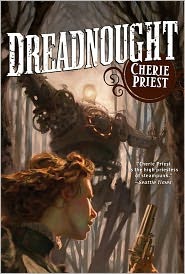
Dreadnought is the second book in the Clockwork Century Series by Cherie Priest, following the, um, groundbreaking hit, Boneshaker. (Sorry, had to do that). While Dreadnought shares the same universe and time period as Boneshaker, and there are peripheral tie ins between the stories, this is not purely a sequel. The main characters are different and where Boneshaker took place exclusively in the Pacific Northwest around Seattle, Dreadnought starts from Richmond, Virginia on a thrill seeking adventure to try to get the main character, a Confederate sympathizing nurse named Mercy Lynch, to Tacoma, Washington to see her long lost father before he dies.
Mercy isn’t your typical Southern Belle, and this isn’t your typical Civil War story. Forget about Rex and Scarlet. Mercy has seen a lot of horrible things come into the hospital in Richmond, Virginia during her short time there nursing the battle wounded, but she is good at her job, and has developed an edge to her that leaves her able to handle just about anything. The trip across country by dirigible, horse and train is no cake walk. The world west of the Mississippi is ruled by bandits and contested by no less than three nations. An entire army has gone missing, and rumors are flying that something horrible is happening in Utah.
Dreadnought is a pretty good book, but you have to be able to buy into the ‘Steampunk’ way. There were a few times where I wondered why the characters didn’t do ‘X’ or how could this character hear this sound in the distance when they are on a moving train, which, unless trains are a lot quieter in the Clockwork Century, would seem to be difficult to do. You have to be able to suspend your disbelief. If you are reading Steampunk in the the first place, you’re probably more than willing to do just that, and you can forgive small inconsistencies that allow the plot to keep moving.
The characters are wonderful, and the images Priest builds are so well done, you can almost smell the coal dust in the air. It is a fine example of not only what Steampunk is, but what it should be. The plot moves nicely and is always climbing, till it reaches a gruesome climax that keeps you turning the pages.
I enjoyed Dreadnought and look forward to reading Priest’s next book, though I may get it once I get an e-story reader. This dang book was heavy, and hauling it around in my bag added just enough weight to convince even a stubborn old coot like me that there are advantages to carrying around an e-reader. Or I may just wait and read it only when I’m stuck at home. Either way, I’m looking forward to the next installment in the series.
I got stuck this last week. Stuck deep in the mud of telling and not showing in my work in progress. For a writer, the sin of telling the reader something, instead of showing the reader through the eyes of your character or their reactions is the equivalent to breaking four of the ten commandments. You hear about this in every writers course and session, and read about it in every book on writing. All of us do it from time to time. Sometimes you have to do it. Sometimes you do need to do it for a couple of lines, or maybe a paragraph. But I did it for an entire chapter. And when I finished typing the last word of the chapter, I knew I was doomed. What’s worse, I actually knew it while I was typing, and couldn’t stop myself.
So I spent four days unraveling the mess of a chapter, and what I spent one chapter telling, will probably take me four chapters to show. But that’s okay, because it was a major incident, and it affected all the characters differently, and my main character has to deal with all of these people. This incident will shape these characters, and that needs to come out in what they say and what they do, not in what they saw.
The trouble started when I took my main character out of the room where and when the incident happened. I did it because it wasn’t logical for him to be there at the time. He arrives later, after all the action is done, and is left to clean up the mess. It’s a big mess, and he needs to know what happened because it will affect him. But I can’t have him just ask one person, because the event was very traumatic for all involved, and just the act of recalling it will be even more traumatic, and he knows this. So he’s got to slowly extract the details through a number of conversations, and I have the job of finding a way for him to do it so that the reader doesn’t get bored and/or frustrated. My original strategy was for him to read the ‘police report’, but that was the very definition of telling, and using props to do it is just an excuse for lazy writing.
So instead, those witnesses will talk to him – will ask him for advice, or won’t ask or won’t talk to him, and from that, he will have to gain details or suppositions that may lead to further conflict within the story. There will still be the police report, but it will not have the details needed to fill in all the gaps. He won’t know the mental state of the antagonist and the victim, for instance, but he can guess, and form his own opinions and prejudices. And that’s a more powerful tool in the toolbox of storytelling than just giving the reader everything in one big narrative dump.
The other issue I ran into this week is a pacing issue. As usual, the story is evolving as I write it, and what I thought would take a third of my 70000-80000 word quota, is now sitting at 32000, with still another 16000-20000 words to go. I’ve let my mind begin to accept that this may turn into what Ben Newland (my critique buddy) referred to last night as a ‘duet’. I’ve never heard that term in regards to books before, but it seems to work. Basically, I can now see my original plot split over two books in the 70000 word range. I’m a little bit short on this first one, but there are lots of places where I can add conflict without feeling like I am completely pumping the story full of whip cream.
Also, the further I’ve gotten into this story, the more I like the world I’ve created for it, and I can see a hundred other stories that could be vaguely connected to it, and it wouldn’t necessarily involve the main characters as they stand now. But, like Cherie Priest has created with her Clockwork Century books, I could see keeping the world I have built alive for a number of different plots. That excites me.
Aside from the work on the book, you’ve also probably noticed a distinct uptick in my blog writing here. I can’t say that I will be able to keep up this pace, especially once I get back to commuting to may day job full time again in the next few weeks, but I really enjoy writing these blog entries, and doing the reviews, and just writing. The more I write, the more I love it. I’ve even considered trying to find some freelance work to do – as if I’m not already busy enough. But writing doesn’t seem like work. It relaxes me and soothes me, and I look forward to these evening blogging sessions more and more all the time.
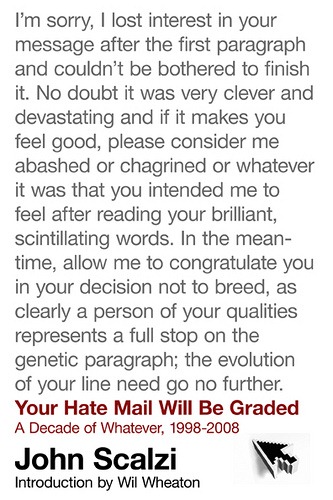
If you’ve read this blog since the beginning, you already know I’m a big John Scalzi fan. I’ve reviewed his science fiction books, mentioned his blog, and submitted short stories to his contests. But I’ll point the finger straight at my wife for getting this book and suggesting that I read it. Frankly, I somehow missed that this one existed until she found it. I guess I’m not the fan I thought I was, and I am duly ashamed.
It’s a rather unusual book in that it is a collection of blog entries from Whatever.Scalzi.com (there I go again) he did from (as the cover points out) 1998 to 2008. It’s not all of his entries. Good lord, the man is way too prolific for that. But it is a good sampling of his work. The topics he covers are broad: from writing, to politics, to history, to the media, to family and beyond. Every one of them is uniquely Scalzi-esqe – witty, acerbic, irreverent, poignant, sometimes outrageous. Scalzi routinely challenges your vocabulary and make obtuse allusions that in anyone else’s hands would seem esoteric. But what he writes works, and you just know, even though you don’t know the full context of the allusion, that that was the perfect reference to make at the right time. There is a reason he gets paid the big bucks for writing. He knows his shit.
Scalzi leans heavily to the left, so those people who agree with him, will love this book. Those on the right, well, they’ll probably be offended by it. There were a couple of political hot-button issues like gay marriage and creationists versus evolutionists that he spent perhaps a bit too much time on. But it is his book, and he can write what he wants. That’s the whole point. He wrote about and included what he feels passionate about, and I will not condemn a man for that. I hope that someday I have the nerve to do the same. As a writer just starting out, I know I have to avoid politics and religion in my opinion columns. I can’t afford to lose any readers to satisfy my need to rail against the establishment. Not yet, anyway.
If there was an aspect of the book I didn’t like, it was that perhaps he didn’t cover his writing enough. I wanted to know more about where his ideas come from, or how he works on his books (does he plot them out, how many people review them, etc). He provides some very sage advice for teenager writers, and a reality check for writers who are ready to give up their day job to write full time. I think he calls them ‘idjits’, though that may have been somebody else he was referring to.
I read this book on my IPhone, since my wife downloaded from ITunes before she got her Kindle. It’s actually not a bad book to read on an e-media device (see, still not calling them e-books). The entries are short, and surprisingly, I liked the IPhone–IBook interface a lot better than the Kindle. That said, I wouldn’t want to read a novel on it, but a work like this, eh, not so bad.
By the end of this book I realized that John Scalzi is not a man I would ever want to get into a debate with. He would flat out wipe the floor with me. I’d be resorting to “Nuh-uh” and ‘Oh yeah?” in no-time, while I slowly try to slink out of the room in sheer embarrassment. Debating with John Scalzi would be like trying to heckle a really, really good comedian. And I’ve done that. Let me tell you. You don’t want to heckle someone who gets paid a hundred bucks a minute to make jokes, and you don’t want to get into any kind of debate with someone like Scalzi if you are someone like me. Better off to sit back, drink your drink, enjoy the show, and let some other poor schmuck who thinks he is smarter than he is, become fodder for the cannons in John Scalzi’s head.
In my last blog entry, I wrote at length about what I love about books, but I think to understand why I love them, you need to know how I came to love them and the role they played in my early life.
I cannot remember a time when I didn’t read. I don’t remember learning to read, and I have no idea if I read at an extremely early age or not. But I do remember always being a voracious reader. I read everything I could get my hands on, including the backs of the cereal boxes on the kitchen table every morning. And I know exactly where I got this need to read from. My mother.
Back before my sister and I were born, back in the 1960’s, my mother worked at a news service – a distribution center for books and magazines where trucks dropped of books coming in from publishers, or returned unsold books from book stores around the region. One of her jobs was to rip off half the front cover of the returned books, send that back to the publisher, and to dispose of the rest of the book. The publisher meant for the news service to destroy the book, but the company let the workers take home a few. Mom built up quite a collection that way – her own, personal library. On the second floor of our old farmhouse, tucked away behind a paneled door in a spare bedroom was a walk in closet where the slope of the roof made the ceiling a little too low to be useful. Along two of the walls of this closet, illuminated by a single, bare light bulb, were four or five rows of pine boards supporting dozens, if not hundreds of books. Not all of these were from the news service. Many were bought at yard sales for a quarter a piece and later from used book stores. But the collection started with dozens of these coverless or half-covered books.
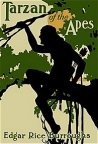 That room was a treasure trove for me as a child. Among my favorites were the entire Tarzan series by Edgar Rice Burroughs. She had an entire wall of Louis L’Amour (her favorite) and Zane Grey (who she liked, but not as much). There were, of course, a boatload of Harlequin Romances, too. I’m pretty sure I avoided those. But there were also disaster fiction tomes like The Glass Inferno by Thomas Scortia and Frank Robinson, Jaws by Peter Benchley, The Last Canadian
 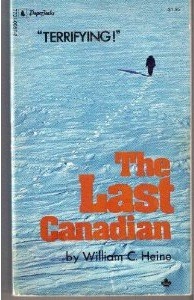 by William C. Heine, Firespill by Ian Slater and classics like The Swiss Family Robinson by Johan David Wyss, Chiefs by Stuart Woods and Roots by Alex Haley. I spent hours perusing these shelves and days curled up in an old wicker chair reading those books. Eventually, we started adding authors like Tom Clancy and Stephen King and John Grisham to the mix. King’s Christine scared the crap out of me, and dared me to write my first horror novella. Tom Clancy’s Red Storm Rising inspired me to write my first novel. I just kept reading.
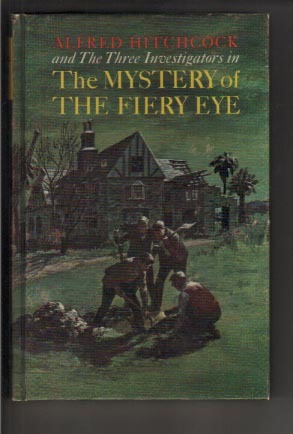 I can’t say that I started out reading those adult books. I loved reading The Three Investigators, Encyclopedia Brown, The Hardy Boys and Tom Swift. I had collections of all of those, and if I have one regret about my books, it’s that I didn’t keep them. Not only for me, but for my kids. I read Judy Blume and Black Beauty and Aesop’s Fables and comic books (more Bugs Bunny and Little Lulu than Justice League).
In elementary school, we had the Multiple Sclerosis Read-athon, and for me that was like giving me a license to print money. What? I get to read and call it homework? You had to be really careful how much you sponsored me for. I could bankrupt you.
When we ran out of books at home, we took frequent trips to the library. The librarians knew that when I brought a stack of books to the counter that exceeded the maximum checkout rule, that I was good for it. The books would be back soon. I remember the librarian – Madeline, I believe her name was – with her dark hair always done up in a bun with a pencil or two hidden in there, who got to spend all day surrounded by books. I was jealous. Her job, for a while, seemed like the coolest job in the world.
I took care of my books. I treated them like the treasures they were and are. I didn’t realize how much work went into creating them, but I loved the worlds they created for me and the places they took me. I grew up on a small family farm in Canada, and the winters could be brutally cold. But I could sink into a chair and be on an island with a certain Swiss Family in minutes, or swinging through the jungle with a wildman in no time.
Now, as a parent, my kids are exposed to books every day. Both my wife and I read, a lot. My office is stacked with books. The kids already have a huge collection of story books, and we read to them every night. There is no greater threat we can make when they are misbehaving at bed time than to say, “Okay then, no book.”. I can count on one finger the number of times we’ve actually carried out that threat, and the only time they don’t get a book is if we are coming home late from a road trip and they go straight from the car to bed. Sure, there are nights that neither of us feel like reading to them, and we say ‘short book’, and scamper out of the room as quick as we can. They don’t yet care for their books in the way I want them to. Some of the covers are ripped and torn, or colored with crayons, and that makes me cringe. But they want to learn to read, and even if they can’t read yet (they’re just 4), my daughter will turn the pages and tell the story as she sees it if we are not available. That’s so cute, it’s almost beyond words. And when they actually start reading to us, or reading on their own, it’ll hit me right… there.
Someday, I am sure I will go to the library with them, and they will want to take more books out than the library allows. But the librarian will recognize them and say it’s okay, because they will know they will read them all, and they will be back for more, long before the books are due. That’s a circle that will trace its roots back to that little storage room and those shelves of books, and back to a grandmother who was also, always reading.
And I will be so proud.
 As I mentioned in my last blog entry, I recently read Beth Revis’ book Across the Universe on my wife’s Kindle. It was the first book I’ve ever read in electronic format (if you exclude the books I’ve written on a computer).
I’ve resisted the idea of e-books for quite a while because I grew up with paperbacks, and to me, the experience of reading a book is so much more than the words and the story. I love books for many reasons. The cover art. The blurbs on the back page. The picture of the author. The acknowledgements. The dedications. The tactile feel of the pages. The weight of the volume – literally the weight of the words. The smell of the paper – new and old. I enjoy the social aspects of books. The creases in the bindings formed by previous readings. The look on people’s faces when they see you reading something they are interested in, or have read, and the conversations that starts. The memories books bring back when you see them on your shelf. I can remember where I was in my life when I read just about every book I have. The there’s the bond they form between people when you see that book sitting there on someone else’s shelf. These are all things I love about books. And all things, that for the most part, e-books do not provide.
What I see e-books providing to the reader are very clinical benefits. Reduced shelf space (a realistic concern for many people, including me). Immediate gratification of an urge to obtain or read something. Reduced weight when packing for a trip. Reduced environmental impact… though I’m not positive that ten years from now we won’t have thousands of obsolete e-readers clogging our landfills, while at the very least, books are still on a shelf or have been recycled into other paper products. You can’t resell an e-book at a used book store. As an author, I’m okay with that, but I do wonder how many low-income people will never discover an author because they never saw a stack of his books at Half-Price Books.
My first experience with a Kindle greatly distracted me from the book I was reading, and it wasn’t until halfway through the book that I was able to forget about the medium and focus on the story. Once I was past that, I was able to pay better attention, and my mind grew to accept that I was reading a story. But not a book. I think the world would be a better place if we stopped calling them e-book-readers and called them e-story-readers. They are not books. Not in this format.
I missed a real book. I missed the anticipation that drawing closer to the end of a book gives you. The little progress bar at the bottom didn’t give me that. It was more like a quest in a video game that made reading feel – hurried. I take pictures of pages in my mind. Sometimes I can recall the exact position of a word on a page, even having just skimmed the page because each piece of paper is unique, either in feel or in watermark or in it’s position in the book. You don’t get that with a Kindle.
Having said all that, I do appreciate a few things about a Kindle, and one of them I noticed right away. The day after I finished the book on the Kindle, I picked up Cherie Priest’s book Dreadnought. This is a pretty hefty book, and after an hour of reading, my hands were a little sore from holding it. That thumb pain (which may be unique to me because of a problem I have with my hands), did not happen with the Kindle.
Also, after having remodeled my office last fall, and cleaned out dozens and dozens of books and taking them to a used book store, my bookshelves are once again approaching the overflowing state. And that means more must be purged, or I must once again buy more shelving. And I really don’t want to do either. That is probably my number one reason for even considering getting a Kindle for myself.
The other reason I would get a Kindle is so that my wife and I can share the books she is reading. Because she has a Kindle – and is addicted to it – every time she finds a good book, she has to decide to buy it or download it. She tries to only download the ones she thinks I won’t like. But my tastes are pretty diverse, and I’m getting the feeling I’m missing out on a lot of good reading that she is not telling me about. Partially because she doesn’t want to give up her Kindle to me, I’m sure.
There is no doubt in my mind that at some point I will get a Kindle. I resisted Smart Phones for a long time, saying I didn’t need all those fancy features. Now, I have an IPhone, and while I’m not going to gush over phones like some people I know, I do like and use my phone enough to know that I could never go Smart-Phoneless.
Someday, I will be absorbed into the e-book Zombie Nation. I won’t love it, but I will get used to it, and I will still buy the occasional book in paperback or hardcover. Just like sometimes I still use my landline to make a call and I still surf the web on my computer. Some books will just be better in real paper. And just like I still look back fondly at some of the old video games I used to plan on my Commodore 64, some day I will look up from my Kindle, peruse my shelf of books, pick one up and smell it and feel the paper and miss it. I won’t need all those books, but I will miss them when they are gone.


 Joe Beernink